
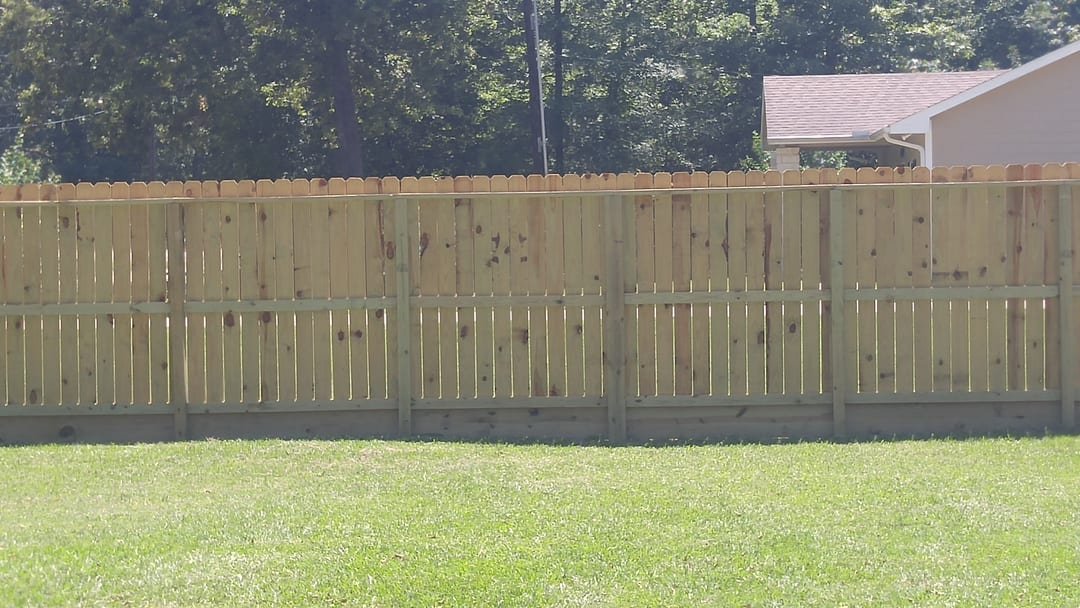
A privacy fence is the only fence that changes what a yard feels like. An open fence marks a line; a solid one makes a room. Around Lake Livingston it is the most-built wood fence by a wide margin, on lots in town and on the road and neighbor sides of lake lots. It is also the fence that catches the most wind and holds the most moisture, which is why how it is built matters more than with any other style.
Reasons to choose a privacy fence
- Privacy, obviously. A neighbor's window, a road, a parking lot, a yard that sits below the lot next door.
- Noise. A solid fence between a patio and a road takes the edge off.
- Containment. Dogs and kids stay in; most dogs will not test a fence they cannot see through.
- Wind and dust. A solid fence on the windward side makes a patio usable on a blustery day.
- Security. A solid six- or eight-foot fence hides what is behind it and is not casually climbed.
- Value for the money compared with any other solid screen.
Where it belongs, and where it does not
On the sides and back of a lot, along a road, around a pool, next to a commercial neighbor. Not on the water side of a lake lot, where it hides the view, and often not out front, where subdivisions cap height and an open fence suits the house. The best lake-lot fences are privacy on three sides and open toward the water. Adjust your privacy like never before covers the middle ground.
Best construction practices
- Posts sized and set for the wind. Four-by-fours in concrete below the soft soil for six feet; four-by-sixes or steel, deeper, for eight. Corners and gate posts deeper still.
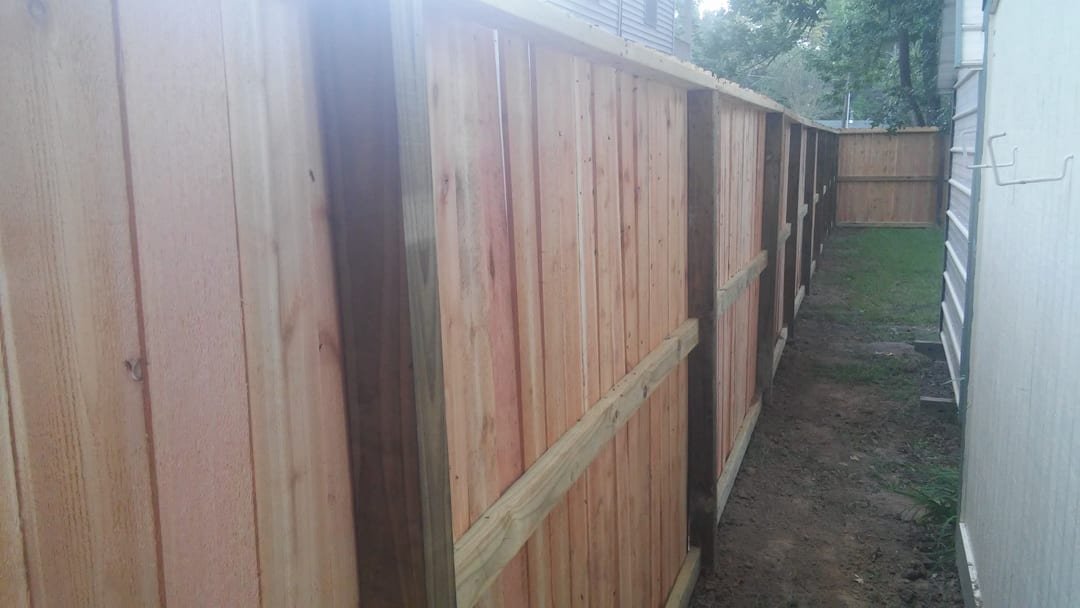
- Three rails on six feet, four on eight, so pickets stay flat and the panel is stiff.
- Rot board at the base.
- Pickets off the ground, nailed with galvanized ring-shanks, flush or board-on-board.
- Post spacing of eight feet on most lots, six on exposed sites facing open water or fields.
- Gates on a diagonal brace or a steel frame, hung on heavier posts.
- Stain once the wood has dried, then every two to four years.
Here is the three-rail build, step by step.
Style choices
Dog-ear or flat-top pickets, flush or board-on-board, a cap rail or a lattice topper, cedar or treated pine. Why dog-ear pickets make a great privacy fence and the privacy fence page cover the options. For the tall version, what goes into an eight-foot privacy fence.
Frequently asked questions
Does a privacy fence lower road noise?
It takes the edge off. A solid six-foot fence between a yard and a road blocks the direct sound and makes a real difference on a patio; it does not make a highway disappear. Height and mass both help.
Which side faces the neighbor?
By custom the finished side faces out, toward the neighbor or the street. Board-on-board and shadowbox look the same from both sides and avoid the question.
How close to the line can it go?
On the line with the neighbor's agreement, or just inside it. Know where the pins are first; we find them during the estimate.