
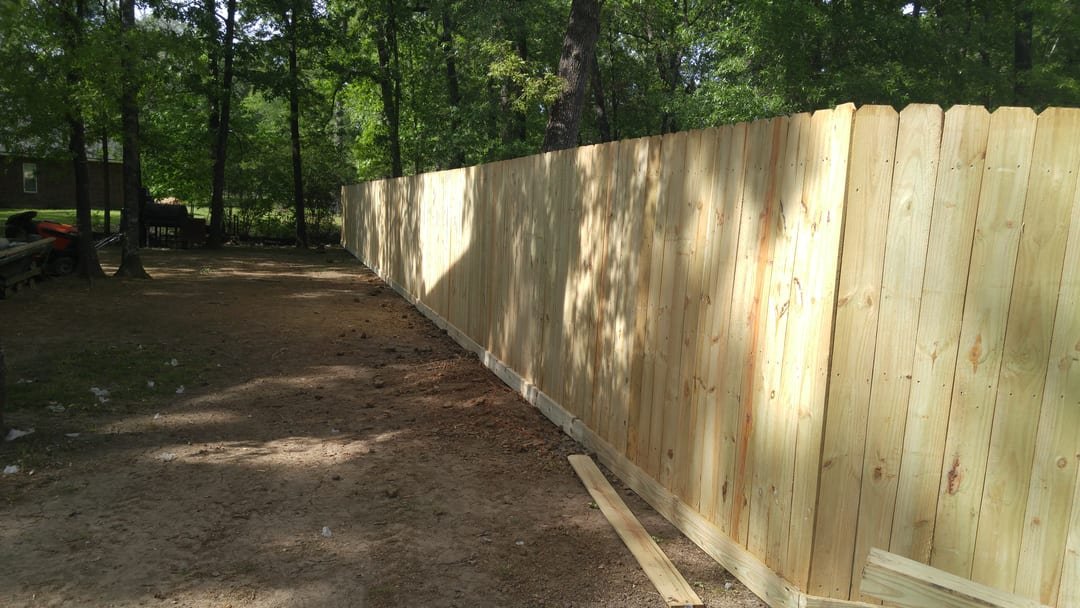
Metal fence has gotten better and cheaper, and we build plenty of it. Wood is still what most people around here want, and not out of habit. Here are the honest reasons to choose wood, the honest reasons not to, and the construction practices that decide whether a wood fence is a ten-year fence or a twenty-year one in this climate.
Reasons to choose wood
- Privacy for the money. A solid six-foot screen costs less in wood than in anything else.
- It looks right here. Cedar and treated pine suit a lake house, a farmhouse and a subdivision lot alike.
- Every style is available. Privacy, picket, horizontal, board-on-board, shadowbox, lattice, split rail, cross buck.
- It can be repaired one piece at a time. A picket, a rail, a post. Nothing else is as easy to patch.
- It can be changed. Stained a new color, topped with lattice, raised, extended, matched years later.
Reasons to think twice
Wood needs stain every few years and will go gray and split without it. It rots where it touches wet ground. It catches wind as a solid panel. For a second home nobody maintains, a pool, or a line right at the water, aluminum or coated chain link may be the better choice, and we will say so.
Best construction practices
- Species for the job. Cedar for pickets, rails and anything that stays natural; treated pine for posts, rails under cedar, and painted or solid-stained fence.
- Posts in concrete below the soft soil, crowned to shed water, with gravel under the post where the ground stays wet; corners and gate posts deeper.
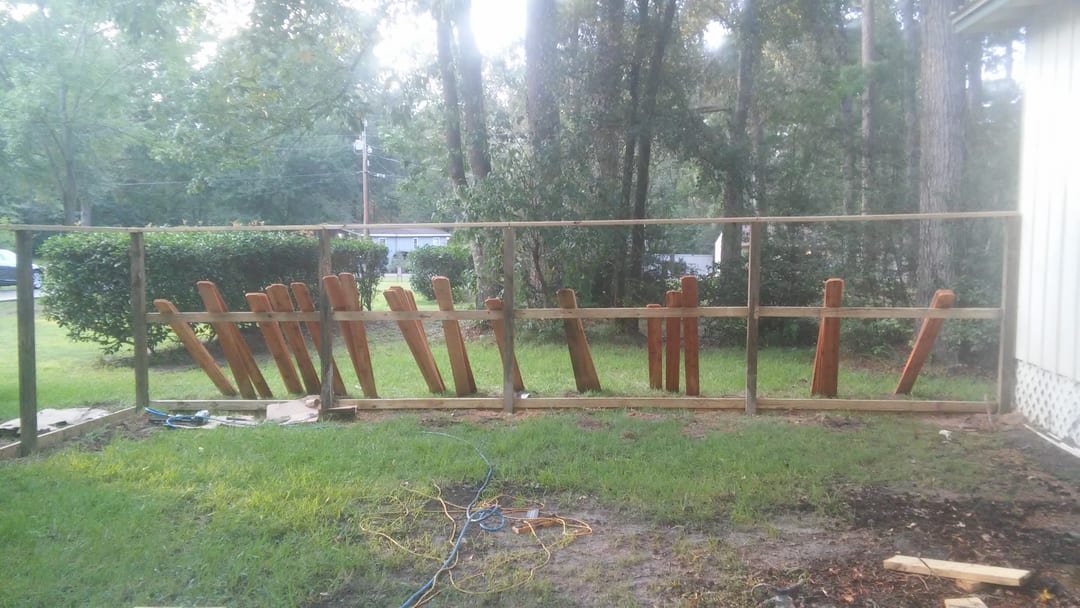
- Three rails on a six-foot fence, four on eight, so pickets stay flat.
- A rot board along the bottom, so the ground touches one replaceable board.
- Galvanized ring-shank nails or coated screws, two per rail per picket.
- Gates braced and on heavier posts, with a steel frame under a wide or tall wood gate.
- Stain on a schedule, after the wood has dried, every two to four years.
Building a three-rail privacy fence with a rot board walks through items two through five.
Where wood fits best
Backyards and side yards, in-town lots, the road side of a lake lot, front yards as picket or split rail, and anywhere the owner wants a fence that looks like part of the house. See wood fence for the styles and choosing the right fence for how wood compares.
Frequently asked questions
Is wood still the best value fence?
For a yard that needs privacy, yes. Nothing else gives a solid six-foot screen for the money. For a boundary that does not need privacy, chain link or wire costs less; for zero upkeep, aluminum costs more.
How often does a wood fence need stain?
Every two to four years, sooner on sun-facing runs. Water that soaks in instead of beading is the sign.
Does wood fence hold up in the lake humidity?
Built right, yes. Posts in concrete, a rot board, galvanized fasteners and a stain schedule are what make the difference. Wood fence built without those fails here faster than in a dry climate.