
Fence & Gate Repair
Lakefront Fence Installation
Fences for Lake Livingston waterfront lots: sloped runs that step with the grade, posts set for soft shoreline soil, view-friendly styles, and the easement and HOA rules checked before we dig.
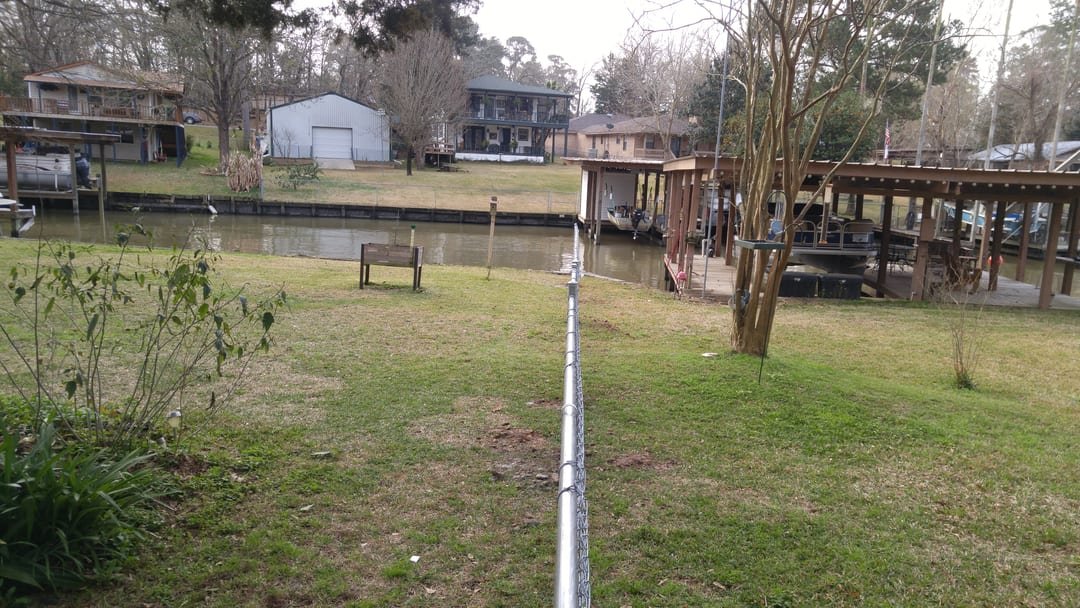
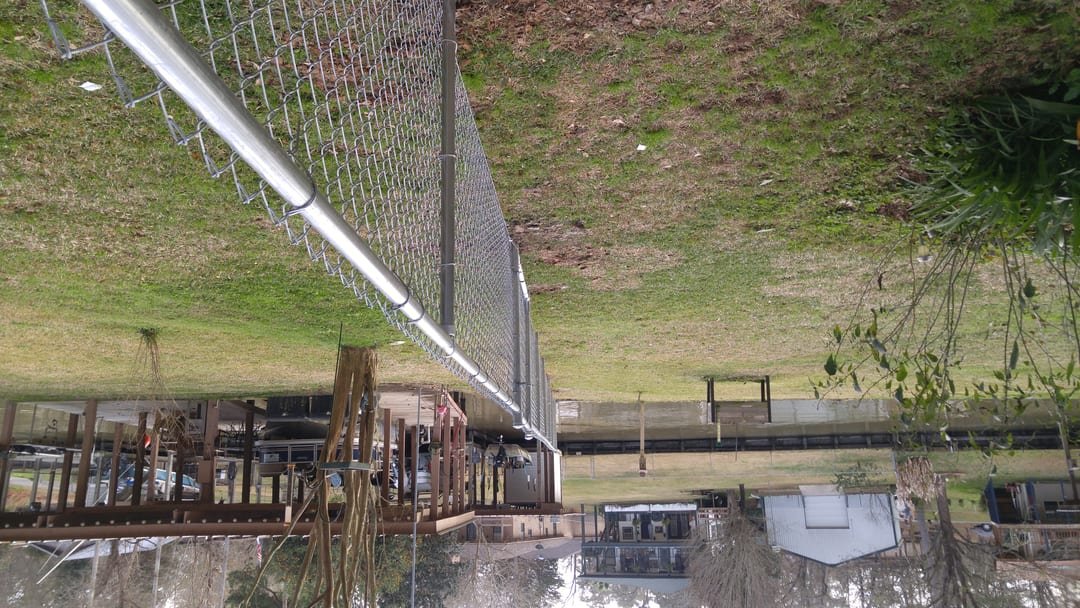
A lakefront lot is a different fence job from a lot in town. The ground slopes toward the water, sometimes steeply. The soil near the shore is sandy or soft. There is an easement along the shoreline and often a subdivision rule about what can be built near it. And nobody wants a fence that hides the reason they bought the place. We build fences on Lake Livingston waterfront properties from Onalaska and Point Blank around to Cape Royale, Coldspring and Trinity, and the job always starts with those four things: slope, soil, rules and the view.
Styles that keep the view
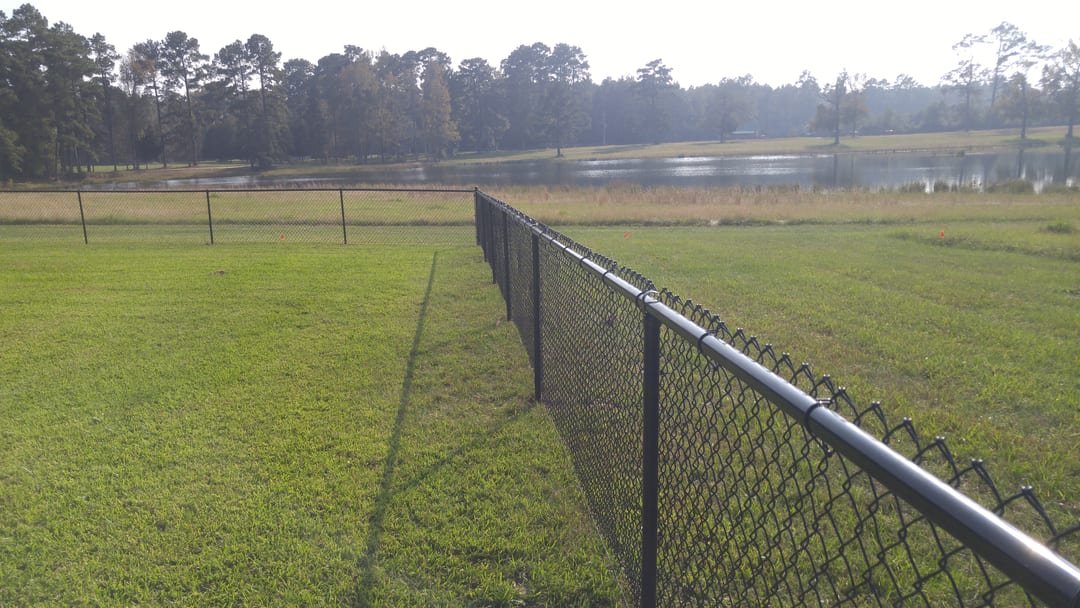
- Black vinyl-coated chain link. Almost disappears against trees and water, holds a dog, follows a slope well. The most common lake-lot fence we build. See chain link fence.
- Aluminum and ornamental. The finished look for a lake house, and aluminum cannot rust at the water. See aluminum fence.
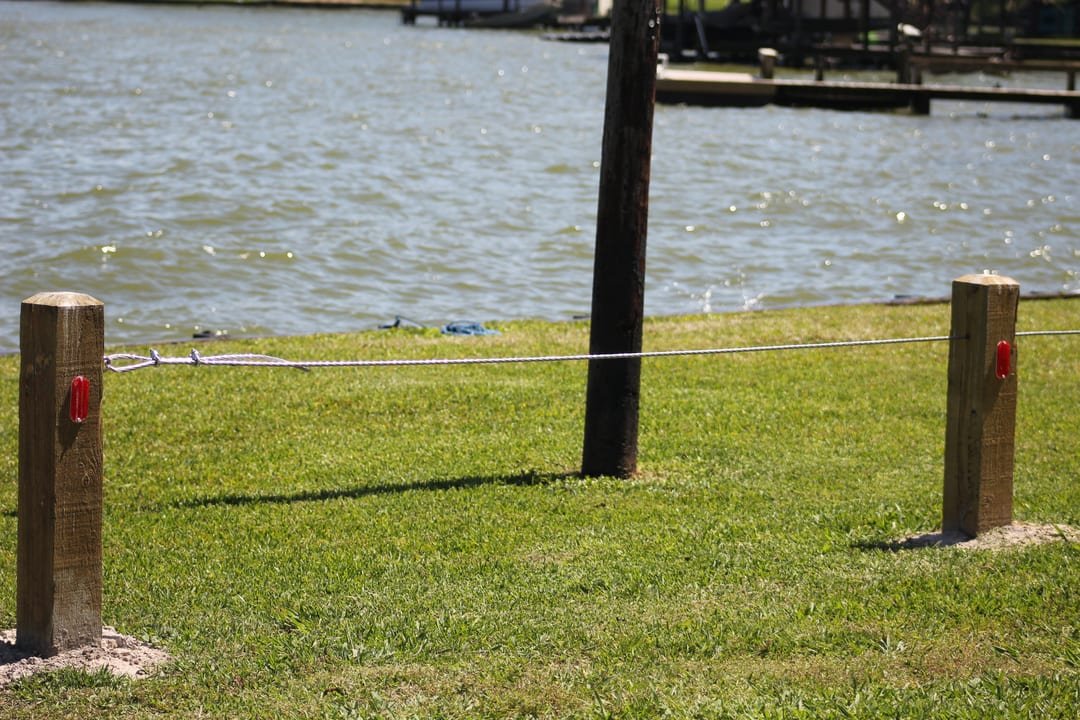
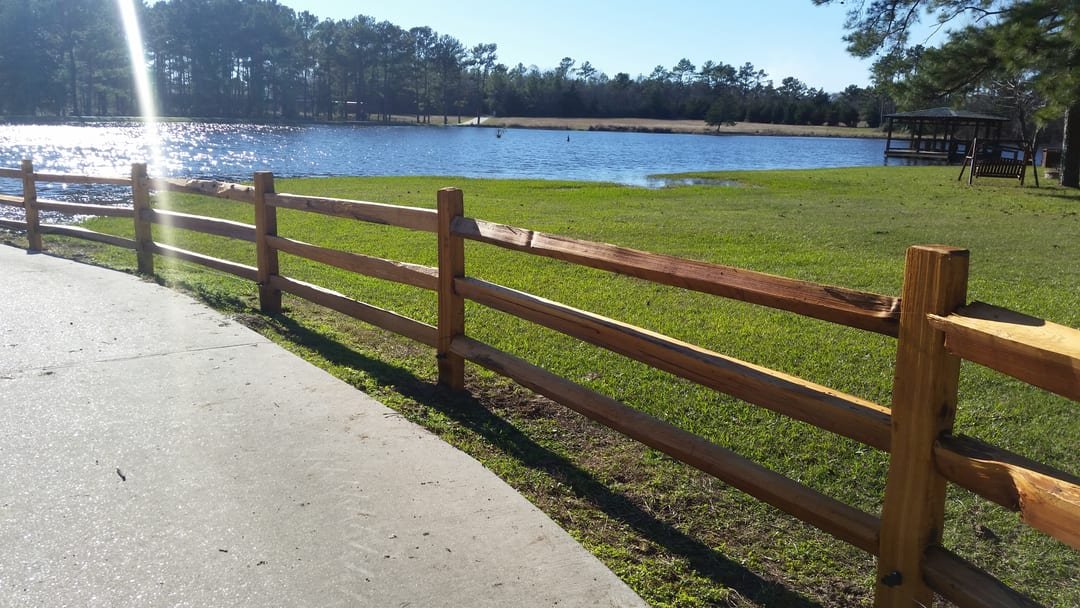
- Cedar split rail with wire. The country look, with wire behind it for the dog. See cedar split rail.
- Privacy on the sides, open on the lake side. A privacy fence between neighbors and along the road, an open fence toward the water. See privacy fence and screens.
Slope
Most lake lots fall toward the water, and a fence has to follow. Chain link and wire rack with the grade so the bottom stays an even height. Wood and ornamental step down in sections, each bay level, with the step sized so there is no gap under the fence a dog can use. On a steep bank we set posts closer together and sometimes terrace the run. We walk the line with you and mark where the fence will step before it is built.
Soil near the water
Shoreline soil is often sand or soft fill over clay, and it is wet for much of the year. Posts near the water go deeper than on an upland lot, into larger concrete footings, and we size up the post where the ground is loose. Corner and gate posts get extra attention. Hardware is galvanized or coated, because everything near the lake rusts faster.
Easements and rules
Lake Livingston's shoreline is managed by the Trinity River Authority, and lake subdivisions like Cape Royale and many others have their own setbacks, height limits and style rules. Before we set a post near the water we confirm where your line ends, what the easement allows and what the HOA requires. Lake Livingston 411 covers the basics of fencing a lake-area property, and Lake Livingston fence and gate specialist goes into what we have learned building on it.
Docks and bulkheads
We build fences, gates and decks. We do not build docks, piers or bulkheads, and we will point you to a marine contractor for those rather than stretch past what we do well.
Frequently asked questions
Can I fence all the way to the water?
That depends on where your property line ends, the easement along the shoreline and any subdivision rules. Lake Livingston shoreline is managed by the Trinity River Authority, and many lake subdivisions have their own setback rules. We check what applies to your lot before setting a post near the water.
What fence keeps the view?
Black vinyl-coated chain link, ornamental or aluminum, and cedar split rail with wire all mark the line without blocking the water. Privacy fence usually goes on the sides and the road, not the lake side.
How do you set posts in sandy or soft ground near the water?
Deeper and wider. We dig below the soft layer, use a larger concrete footing and, where the ground is very loose, size up the post. A post that is fine on a clay upland lot will lean in lakeshore sand.
Ready to fence a lake lot?
Tell us about the project and we will set up a free on-site estimate. Or just call: we answer the phone.