
Fence & Gate Repair
Deer Fence Installation
Seven- to eight-foot fences in woven wire or black mesh on braced posts that keep whitetail out of gardens, orchards and yards, without turning the property into a compound.
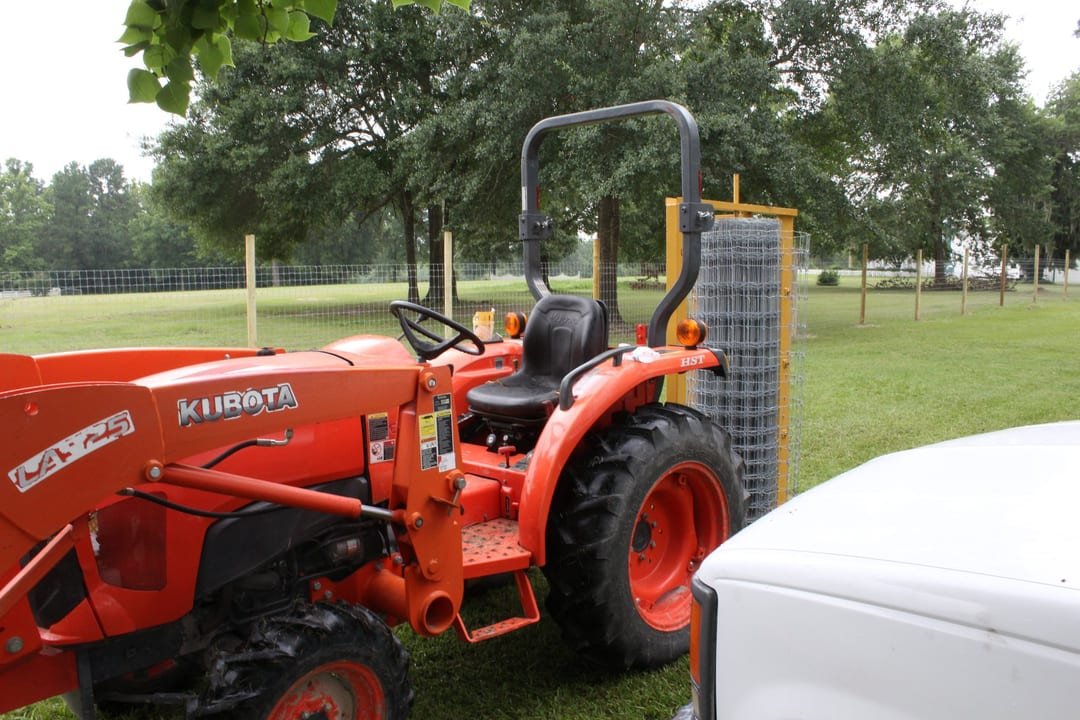
Whitetail deer are everywhere in Polk and San Jacinto County, and a garden, an orchard or a bed of hostas next to the woods is a buffet. Repellents and netting work until the deer decide they do not. A fence works. The trick is that a deer fence has to be tall, seven or eight feet, and still look like it belongs on a lake lot or a country yard. We build deer fences around gardens, orchards and yards in woven wire, welded wire and black mesh on braced posts, and tall game fence on acreage. Game fencing covers the high-fence side for hunting properties.
Deer fence options
- Woven wire on T-posts or wood. Eight-foot rolls or stacked rolls of field fence. Strongest and most economical for an orchard or a large garden. See field fence.
- Black welded wire or mesh on black posts. Nearly invisible from a distance; the choice for a yard or a garden near the house.
- Wood frame with mesh. Cedar posts and rails with wire inside, so the fence looks like part of the landscape and still stands eight feet tall.
- Fence extensions. Adding height to an existing fence with extended posts and wire above, where the posts can take it.
- Double fence. Two short fences a few feet apart, which deer will not jump because they cannot see a landing. Works where a tall fence is not allowed.
How we build it
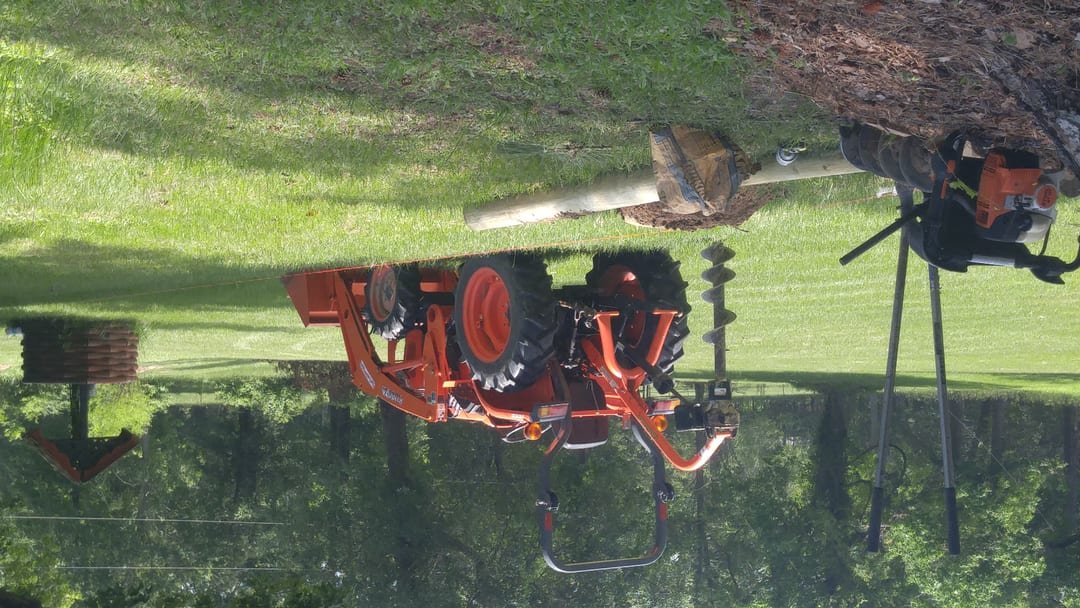
Tall fence catches wind and pulls hard on its corners, so a deer fence gets real braces: H-braced wood corners and ends set deep, line posts tall enough to carry eight feet above grade, and wire stretched evenly top to bottom. The bottom edge goes tight to the ground, buried or aproned where rabbits and dogs dig. Gates are built tall, with a frame and mesh, and latched so they do not blow open; a deer finds an open gate within a night. Where deer pressure is heavy we add a visible top wire or flagging so deer see the fence and do not try it.
Garden fence or deer fence?
A garden fence keeps out rabbits, dogs and chickens with small mesh low on the fence. A deer fence is about height. Most gardens near the woods need both: fine mesh along the bottom two feet and eight feet of height overall. Garden fence covers the small-animal side.
Acreage and food plots
For a food plot, an orchard on acreage or a whole-property high fence, the fence becomes game fence: high-tensile fixed-knot wire on tall posts with heavy corners, built in long runs through timber. We build both ends of the scale.
What affects the price of a deer fence
Height is the cost driver: eight feet of fence takes tall posts, bigger braces and more wire than a yard fence. Woven wire on T-posts is the economical build; black mesh on dark posts costs more and disappears better. A cedar frame with mesh inside is the premium version for a garden near the house. Gates are built tall and framed, so each one adds. Footage matters, which is why fencing the garden or the orchard rather than the whole lot is usually the right call. We price it on site.
Living with deer around the lake
Whitetail move along the same paths every night, and a fence that cuts a path gets tested hard for the first few weeks. Flagging on the top wire, a visible top board and a solid bottom edge get the fence through that period; after it, the deer learn the fence and go around. Keep gates closed at dusk, because an open gate undoes the whole fence in one night. Deer pressure is heaviest near the timber and the national forest around Coldspring, Oakhurst and New Waverly, and lightest in town.
Frequently asked questions
How tall does a deer fence need to be?
Seven to eight feet to stop whitetail reliably. Deer clear six feet when they want to. A shorter fence works only when it is wide at the top or doubled, so a deer cannot judge the jump.
Will a deer fence ruin the view?
Not if it is built from black polypropylene or black welded wire on dark posts, which fade into the trees. Woven wire on T-posts is more visible but cheaper and stronger.
Can you fence just the garden instead of the whole yard?
Yes, and that is usually the better answer. A tall fence around the garden or the orchard costs far less than fencing the property and keeps deer out of the plants they actually eat.
Deer in the garden?
Tell us about the project and we will set up a free on-site estimate. Or just call: we answer the phone.