Fence & Gate Repair
Horse Fencing Installation
Smooth, visible, forgiving fence for paddocks and pastures: no-climb wire with a top board, cross buck, board fence and pipe. Never barbed wire where horses run.
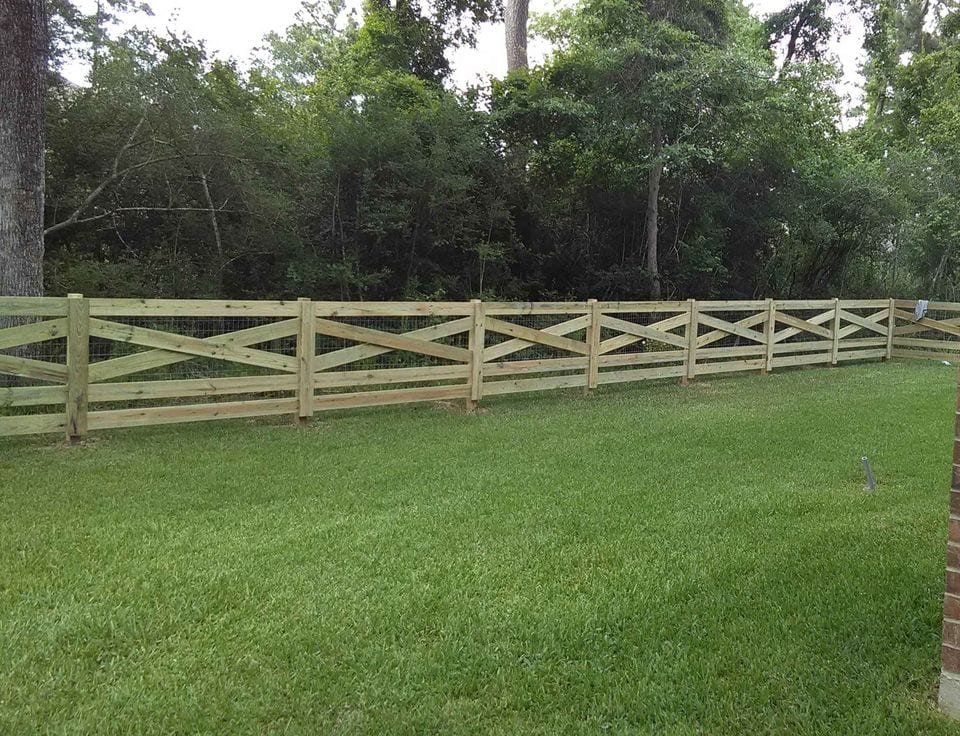
Horse fence has one rule the others do not: it must not hurt the horse. Horses test fences, lean on them, run into them in a panic and put a hoof through anything with an opening the right size. A cattle fence that works fine for cows can maim a horse. We build horse fencing on properties around Lake Livingston, from a single paddock behind a lake house to pastures and arenas on acreage, in the materials that are safe for horses and built to the heights and spacing that keep them in.
Safe horse fence types
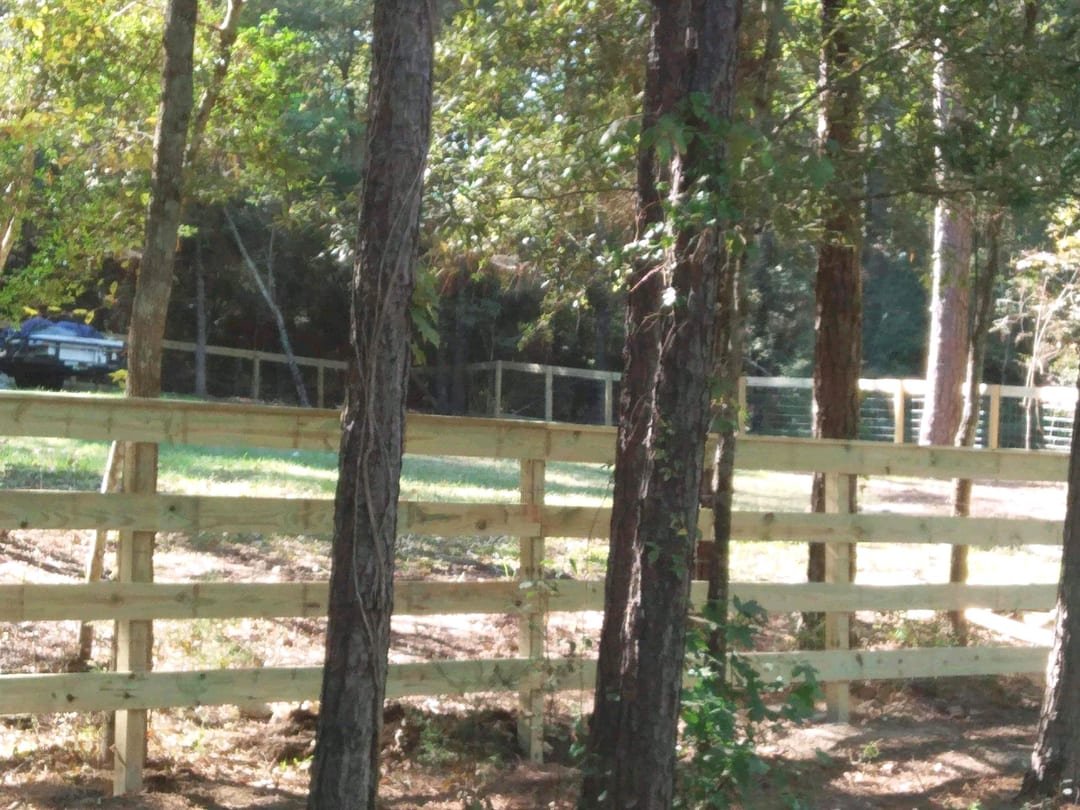
- No-climb woven wire with a top board. Two-by-four-inch mesh a hoof cannot enter, on wood posts, with a top board or sight rail so the horse sees it. The most common safe fence we build. See rolled wire fencing.
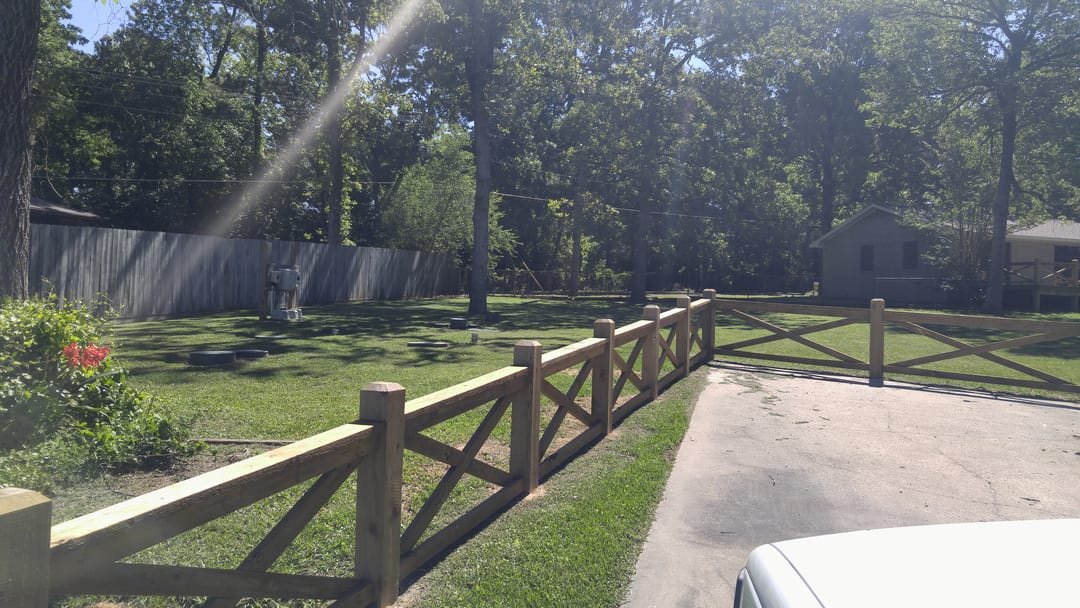
- Cross buck and board fence. The classic look, visible and strong, often with no-climb wire behind it for foals and dogs. See cross buck fence.
- Pipe fence. Steel pipe posts and rails for arenas, round pens and working areas; nothing breaks and nothing splinters. See corral fence.
- Coated high-tensile wire and electric. Smooth, visible coated strands or tape as a pasture fence or as a hot top wire that keeps horses off a wood fence.
- Horse-rated panels for pens, taller and tighter than cattle panels. See panel fence.
How we build it for horses
- Height. Five feet standard, taller for stallions, jumpers and road frontage.
- Visibility. A top board, sight rail or wide tape on any wire fence, so a horse sees the fence before it hits it.
- No gaps, no sharp edges. Mesh too small for a hoof, boards on the inside of the posts, bolt heads and wire ends turned away from the horses, T-post caps where T-posts are used.
- Corners that are not traps. Rounded or angled corners in paddocks so a chased horse is not cornered against a fence.
- Gates that latch with hardware a horse cannot work open, wide enough for a horse and a handler side by side, and no gap a hoof can catch in.
- Posts set deep, because a horse leaning on a fence is a lot of weight, and a leaning post is a loose fence.
Laying out paddocks
Where the gates go, how the lanes run to the barn and the water, and how pastures rotate matter as much as the fence itself. How to set up paddocks for a small hobby farm walks through the layout decisions we talk through on site.
Fixing an unsafe fence
A lot of horse properties around here inherited cattle fence. We replace barbed wire with no-climb, add top boards to bare wire, cap T-posts, rebuild corners and gates, and tie the new fence into what is worth keeping. See fence and gate repair.
What affects the price of horse fence
Horse fence costs more per foot than cattle fence because the materials are heavier and smoother: no-climb wire instead of field fence, a top board, wood posts on closer centers, pipe for the pens. Board and cross buck fence are at the upper end; no-climb with a sight rail is the value choice for a safe pasture. Rounded corners, wide gates and a round pen add. We price it on site and lay out the paddocks with you, because the layout changes the footage.
Frequently asked questions
Why no barbed wire for horses?
Horses are flight animals with thin skin and long legs. When one hits a barbed wire fence it panics and cuts itself badly, often on the legs where injuries are hardest to heal. Every horse fence we build is smooth: no-climb wire, board, cross buck, pipe or coated wire.
How tall should a horse fence be?
Five feet is the working standard for most horses; four and a half holds quiet horses in a paddock; five and a half to six for stallions, jumpers or a fence line along a road. Taller than you think is the safe answer.
What is the safest horse fence?
No-climb woven wire on wood posts with a top board or a sight rail is the common answer: the mesh is too small for a hoof, the top board makes it visible, and it flexes without breaking. Pipe and board fence are also safe when built with no sharp edges or gaps.
Ready to price horse fence?
Tell us about the project and we will set up a free on-site estimate. Or just call: we answer the phone.