

Most wood privacy fences around Lake Livingston fail from the bottom up and the middle out: the bottom of the pickets rot where they touch wet ground, and the pickets cup and twist where a two-rail frame leaves them unsupported. Three rails and a rot board fix both. It is the way we build every six-foot privacy fence, and here is how it goes together.
Materials
- Posts: treated four-by-four or four-by-six, long enough to set deep and reach the top rail.
- Rails: three treated two-by-fours per eight-foot bay.
- Rot board: one treated two-by-six or two-by-eight per bay.
- Pickets: cedar or treated pine, dog-ear or flat-top, six feet.
- Concrete, hot-dipped galvanized ring-shank nails or coated screws, and a cap rail or trim if wanted.
Step by step
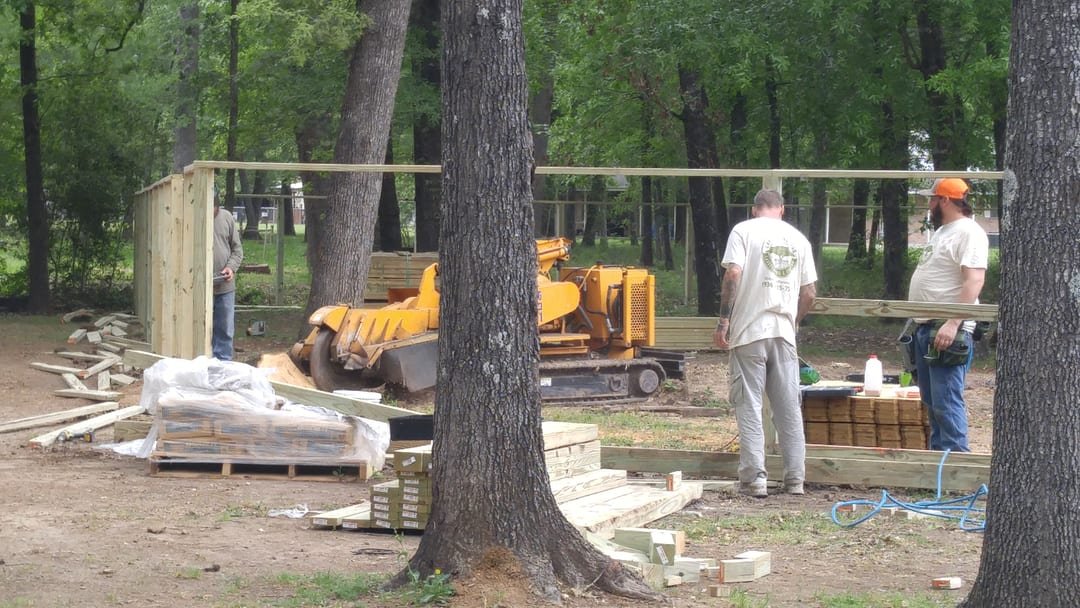
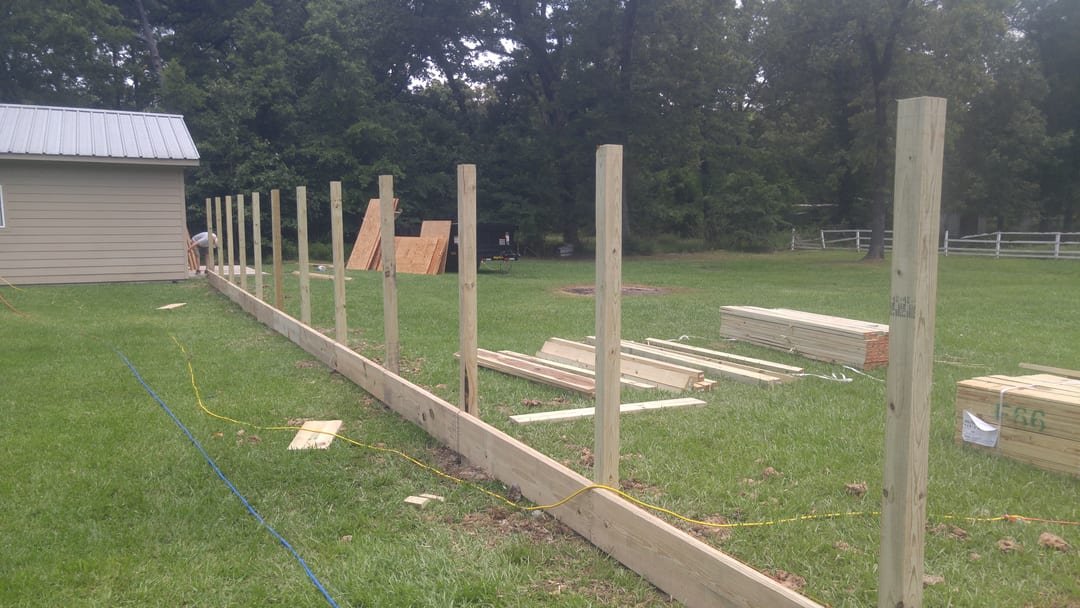
- Lay out and set the posts. String the line, mark posts on eight-foot centers, dig below the soft soil, and set each post in concrete, plumb, with corner, end and gate posts deeper. Let the concrete cure.
- Hang the rails. Top rail near the top of the pickets, bottom rail a few inches above the rot board, middle rail halfway between. Rails go on the outside face of the posts (or in between on a good-neighbor fence), level, with the joints landing on posts.
- Set the rot board. A treated two-by-six run flat against the posts along the bottom, with its bottom edge at or just above grade. It is the piece that touches the ground so the pickets do not.
- Hang the pickets. Starting from a corner, each picket sits on top of the rot board, plumb, nailed to all three rails with two galvanized ring-shanks per rail. Tight edge to edge for flush-board; overlapped on alternating sides for board-on-board.
- Trim and cap. Snap a line and trim the tops level where the ground rises and falls, add a cap rail if the design calls for it, and build the gates with their own diagonal brace.
Why the rot board matters here
Ground near the lake stays damp for months, pine straw and mulch pile against the fence, and the string trimmer hits the bottom of it every week. All of that lands on one replaceable board instead of the bottom of forty pickets per bay. When the rot board eventually goes, it is an afternoon to swap it. Without one, the bottom of the pickets goes, and that is a rebuild.
Why the middle rail matters
A six-foot picket between two rails has three feet of board doing nothing but drying out and moving. The middle rail cuts that span in half, so pickets stay flat and the fence has the stiffness to take a storm across the lake without flapping. It costs one two-by-four per bay. We have never regretted it.
Slopes and corners
On a slope, step the bays so each is level, or rack the rails to follow the grade with the pickets plumb. Keep the rot board following the ground so the gap underneath stays even. At angle changes, set a post at the angle and adjust the bay length rather than forcing the grid. Privacy fence covers the styles and privacy fence best practices the rest of the details.
Frequently asked questions
Why three rails instead of two?
A six-foot picket on two rails has three feet of unsupported board between them and cups, twists and flaps in the wind. The middle rail stiffens the picket and the whole fence. On an eight-foot fence we go to four.
What is a rot board made of?
A treated two-by-six or two-by-eight set flat against the posts at the bottom, below the pickets. Treated pine is standard; it is the board designed to be replaced someday so the pickets never have to be.
Can I add a rot board to an existing fence?
Often, if the pickets can be trimmed up to make room. It is a common upgrade when the bottom of a fence starts to go.