
Farm & Ranch Fence
Rolled Wire Fencing Installation
Welded wire, woven wire and no-climb horse wire, stretched on braced posts for yards, dog runs, pens and pasture. The fence behind most of the wood rail fences you see from the road.
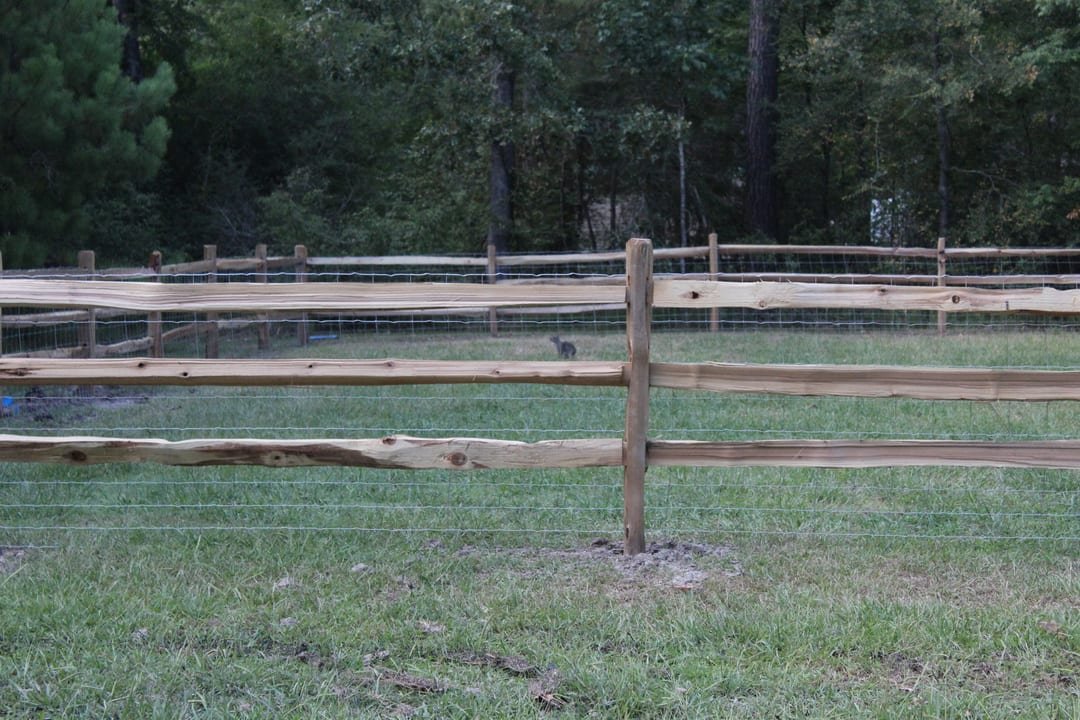
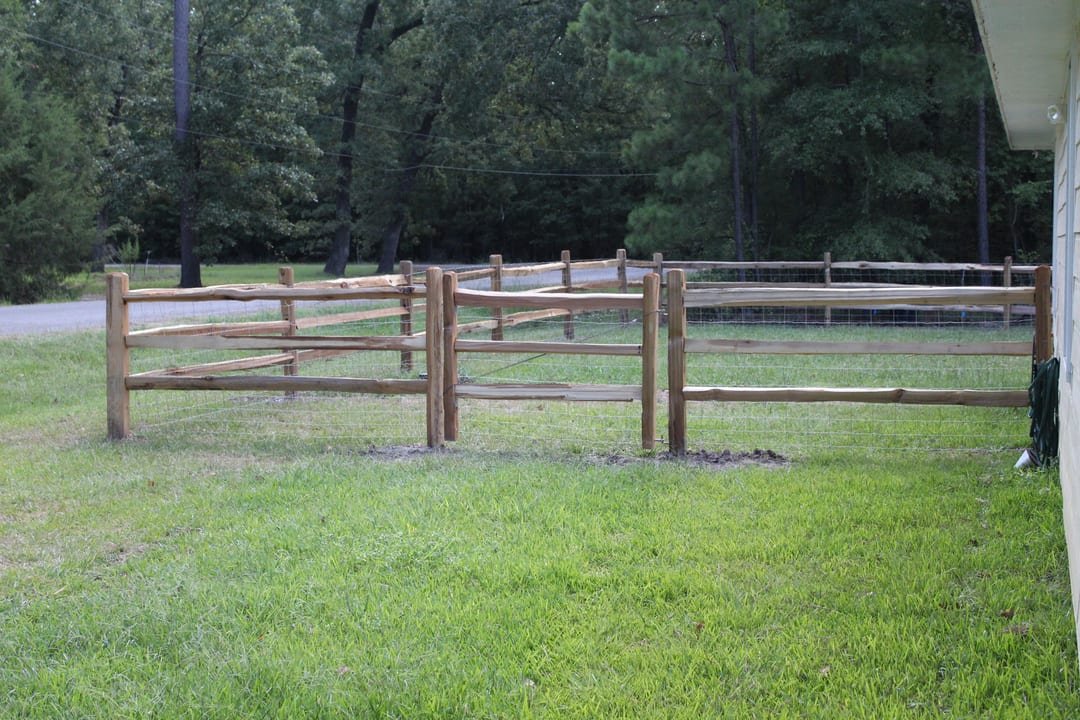
Rolled wire is the family of fence that comes off a roll rather than in panels or strands: welded wire, woven field wire, no-climb horse wire and the finer meshes used for gardens and poultry. It is the most flexible fence we build, in both senses. It handles any length of run, follows the ground, and can be the whole fence on T-posts or disappear behind cedar rails. Most of the split rail and cross buck fences around Lake Livingston that actually hold a dog or a goat have rolled wire stapled to the back of them.
The wire types
- Welded wire. Rigid squares, usually two-by-four inches, galvanized or vinyl-coated. Clean-looking and good for yards, gardens, dog runs and behind decorative fences where nothing heavy pushes on it.
- Woven field wire. Knotted joints with graduated openings. It flexes and springs back, which is what holds livestock. See field fence.
- No-climb wire. Woven two-by-four-inch mesh all the way up. The safe fence for horses and the best woven choice for dogs. See horse fencing.
- Goat and sheep wire. Four-inch openings that a goat cannot get its head through.
- Fine mesh. One-inch and smaller for rabbits and poultry, usually added low on a heavier fence. See garden fence.
How we build it
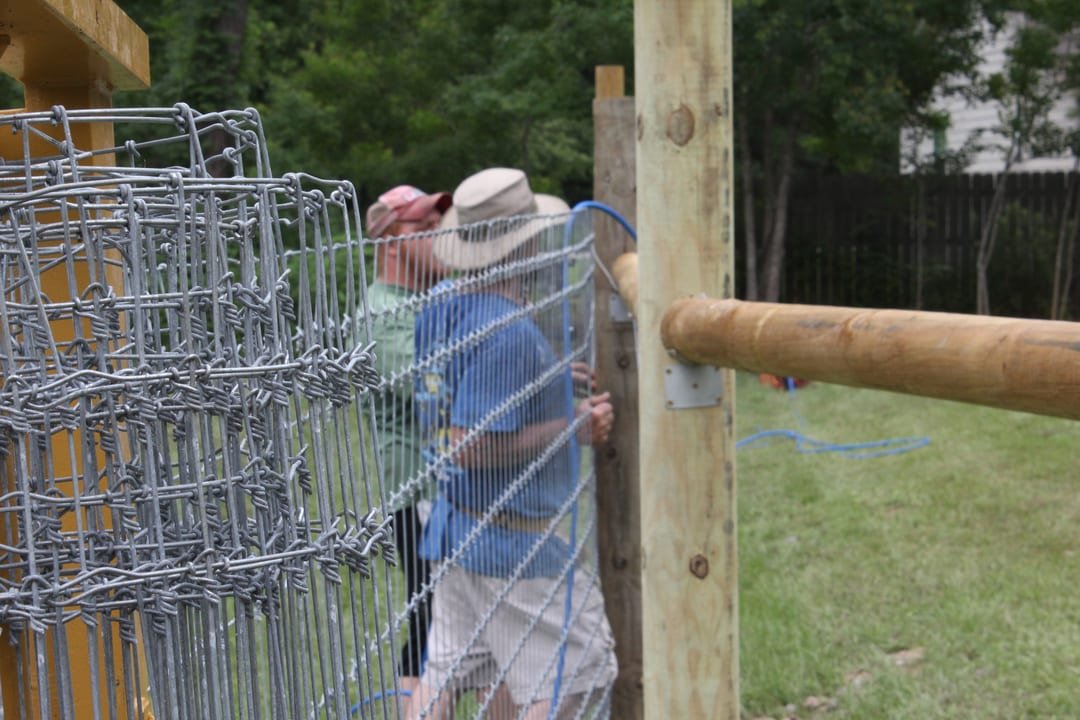
Every rolled wire fence is a stretched fence, so it starts with braced corners and ends: heavy posts set deep, built into H-braces that hold the pull. Line posts are T-posts for pasture and working fence, cedar or treated wood where the fence is seen from the house, on spacing matched to the wire and the ground. The roll is unrolled along the line, stood up, stretched evenly top to bottom with a stretcher bar, then clipped to T-posts and stapled to wood with long galvanized staples driven at an angle. Behind a rail fence the wire goes on the inside so the rails show from the road. The bottom edge is set tight to grade, buried or aproned where diggers are a problem. Gates match the fence, from a wire-covered walk gate to a tube drive gate.
Where we use it most
Behind cedar split rail and cross buck on lake lots and acreage; as the whole fence around pastures and paddocks; on dog runs and yard lines where chain link would look out of place; around gardens and chicken yards; and as the inexpensive answer for long property lines where barbed wire is not appropriate because people and pets are near it.
Materials
Class 3 galvanized wire, which carries far more zinc than the Class 1 wire sold cheap and lasts several times longer in the humidity. Vinyl-coated welded wire in black or green where the fence is close to the house. Galvanized clips, staples and tie wire, so there is no bare steel anywhere on the fence.
What affects the price of rolled wire
The wire itself is the smaller part. Posts and braces set most of the cost: T-posts are economical, cedar or treated wood line posts cost more and look better near the house, and every corner is a braced assembly. Height, buried or aproned bottom edges, and vinyl-coated wire add. Behind a rail fence, the wire is a modest add to that fence. We price it on site and will show you where welded wire would do and where woven is needed.
Frequently asked questions
Welded wire or woven wire?
Welded wire is rigid, neat and good for yards, gardens and dog runs where nothing heavy leans on it. Woven wire flexes and springs back, which is why it holds livestock. If animals will push on it, choose woven.
What is no-climb wire?
Woven wire with two-by-four-inch openings all the way up, small enough that a hoof or a paw cannot go through. It is the standard safe fence for horses and the best woven wire for dogs.
How long does rolled wire last?
Class 3 galvanized wire lasts decades here. Lighter-coated wire rusts in a few years in the lake humidity, which is why we do not use it.
Ready to price rolled wire?
Tell us about the project and we will set up a free on-site estimate. Or just call: we answer the phone.