
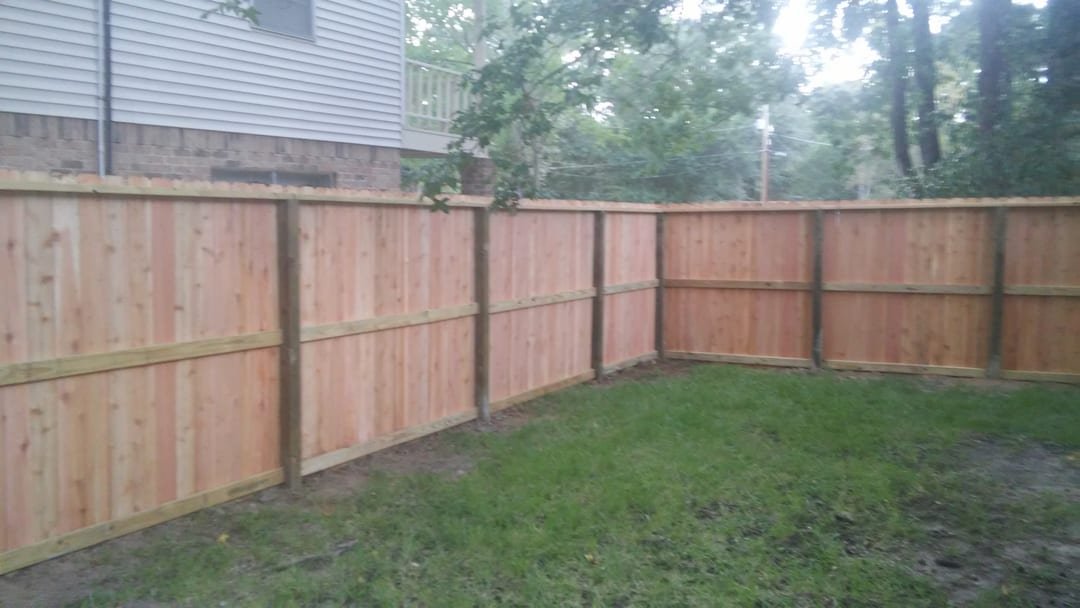
An East Texas winter is not hard on a fence the way a northern one is. There is no snow load and the ground rarely freezes. What we have instead is wet: weeks of saturated soil, leaves and pine straw piling against the boards, and fronts with wind behind them. A little attention in the fall carries a yard fence through to spring. Here is the short list.
1. Clear the base
Leaves, pine straw and mulch against the bottom of a wood fence hold water against the boards all winter, and that is where rot starts. Rake it away from both sides, under the bottom rail and the rot board, and keep it clear. It is the single most useful thing on this list, and it is also a fire precaution; see debris on your fence could be a fire hazard.
2. Stain while you can
A fence going into winter with a tired finish soaks up every rain. If water no longer beads on the wood and you have a dry, mild week in the fall, stain it now. If the window closes, early spring is next. Staining and stain or paint your fence or deck cover it.
3. Push on the posts
After the first long wet spell, walk the line and push on each post. Wet ground lets a shallow or rotting post lean, and a post caught leaning in December is a small reset; one found flat in March is a rebuild. See fence repair.
4. Keep gates swinging
Wood swells, latches stop catching, hinges stiffen. Adjust the latch, grease the hinges, and make sure the gate clears ground that may hold water. A gate that drags in winter mud gets left open.
5. Look up
Dead limbs over the fence come down in winter fronts. Cut them back now while the brush is dormant and the ground will hold a ladder.
6. Fix the small things
A loose picket, a popped nail, a cracked rail. Ten minutes with a hammer and galvanized nails in November saves a section in spring.
Metal fences
Rinse off pollen and mildew, touch up any chip in the coating, grease hinges and check the opener battery. Metal mostly ignores our winters.
Ranch fence
The pasture fence has its own list: corners, wire tension, water gaps and the pens around the hay ring. Winterizing farm and ranch fence covers it.
Thinking about a new fence?
Winter is a good time to build one here. Winter fence installation explains why.
Frequently asked questions
Should I stain before winter or after?
Before, if the wood is dry and you have a mild week; fall is a good stain season here. If you miss it, early spring before the pollen is the next window. Never stain damp wood.
Does winter hurt a wood fence?
Not the cold so much as the wet. Weeks of saturated ground and debris against the fence are what rot boards and lean posts. Keeping the base clear and the ground draining does most of the protecting.
What about metal fence in winter?
Rinse it, touch up chips, grease the gate hinges. Metal mostly does not care about our winters.