
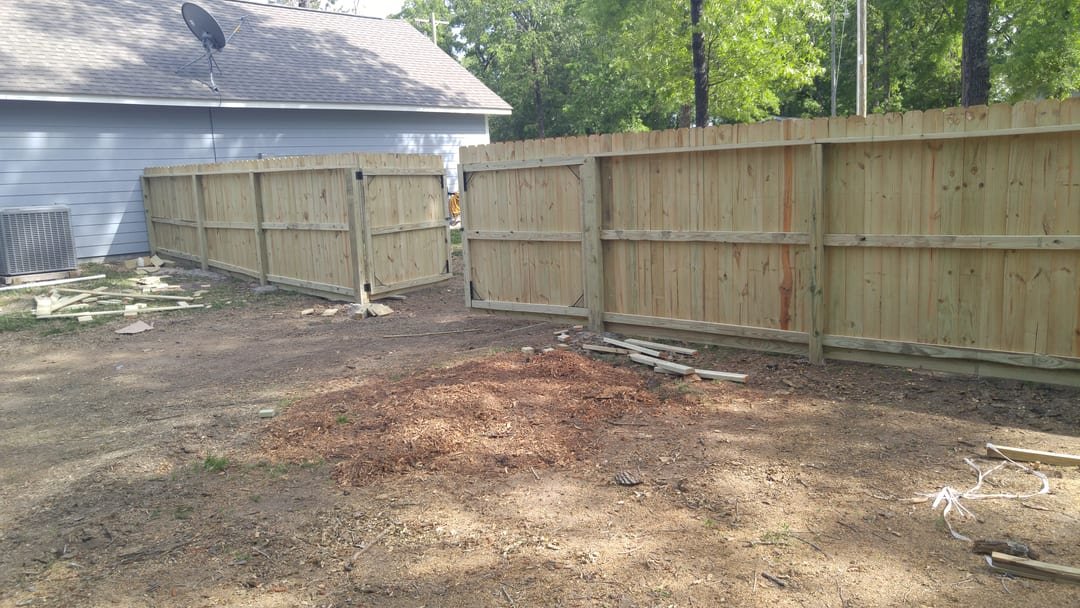
People assume fence season is spring and summer. Around Lake Livingston, winter is often the better time. The weather is mild more days than not, the brush is dormant, the schedule is open, and a fence built in January is ready for the yard by the time anyone wants to use it. Here are the honest advantages and the few things that can slow a winter job.
Benefits of building in winter
- A shorter wait. Spring fills the calendar. Winter jobs get on the schedule faster and are usually finished sooner.
- Easier on the crew and the ground. No hundred-degree days, and the lawn is dormant, so the truck and the auger do less damage.
- Brush is down. Clearing a fence line is easier without leaves and vines, and you can see the line.
- Dry spells. A dry winter week gives firm ground for posts that a wet spring does not.
- Ready for spring. The fence, the gate and the stain are done before the first weekend you want to be outside.
What can slow a winter job
Wet spells. A week of rain saturates the ground, and we do not set posts in soup. Cold snaps. Our freezes are short, but on the days near freezing we wait on concrete and stain. Short days. Less daylight means a long fence takes a day or two more. None of it is a reason not to build; it is a reason to let us schedule around the forecast.
What we do differently in winter
Watch the forecast and set posts in the dry windows. Let concrete cure a little longer on cold days. Stain only when the wood is dry and the temperature holds. Keep the site clean when the ground is soft. The fence itself is built exactly the same.
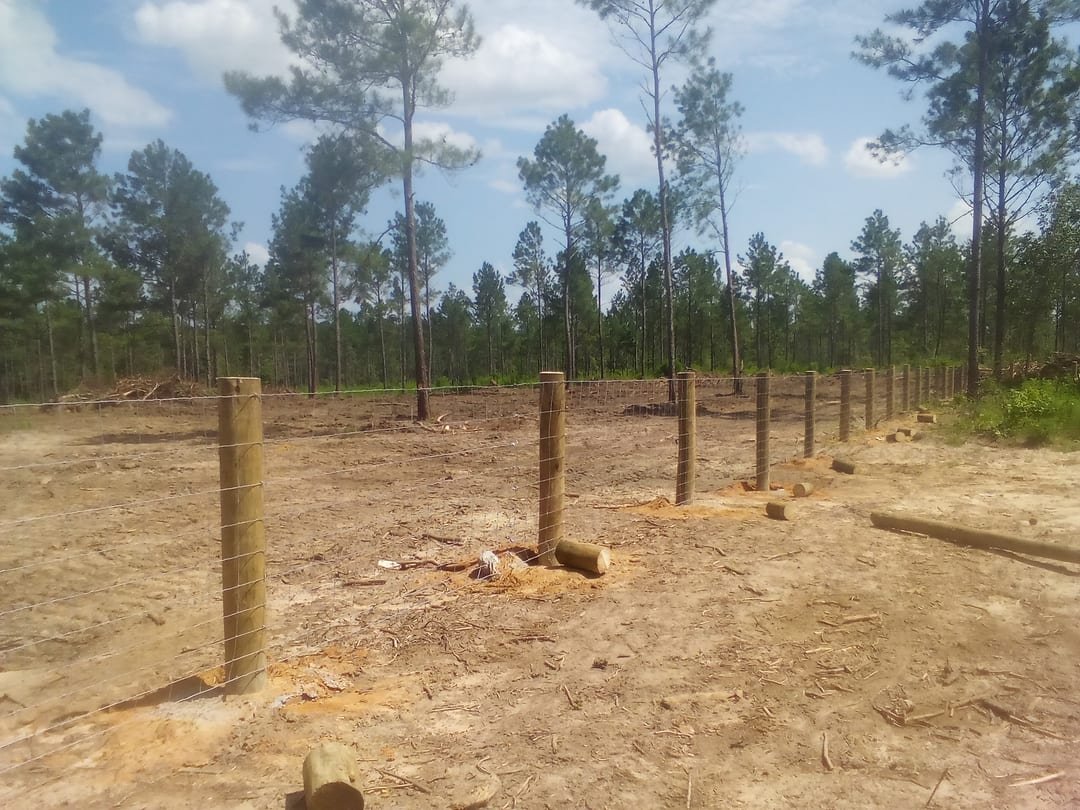
Good winter jobs
Ranch fence through brush that is easier to clear dormant. Repairs and rebuilds after fall storms. Fences that have to be done before a spring event, a pool opening or a new dog. Gates and openers. And any fence where the owner would rather not wait until June. See how to protect your fence this winter for the existing fence, and winterizing ranch fence for the pasture.
Frequently asked questions
Does concrete set in cold weather?
In an East Texas winter, yes. Our freezes are short and the ground rarely freezes at all. On the handful of days it is near freezing we schedule around it; the rest of the winter is fine for setting posts.
Is winter cheaper?
We do not run winter discounts. What winter offers is a shorter wait: spring and summer schedules fill up, and a fence booked in January is usually built sooner than one booked in April.
Can wood be stained in winter?
When it is dry and above about 50 degrees for a couple of days, yes. Many winter weeks here qualify. We watch the forecast and schedule the stain around it.