
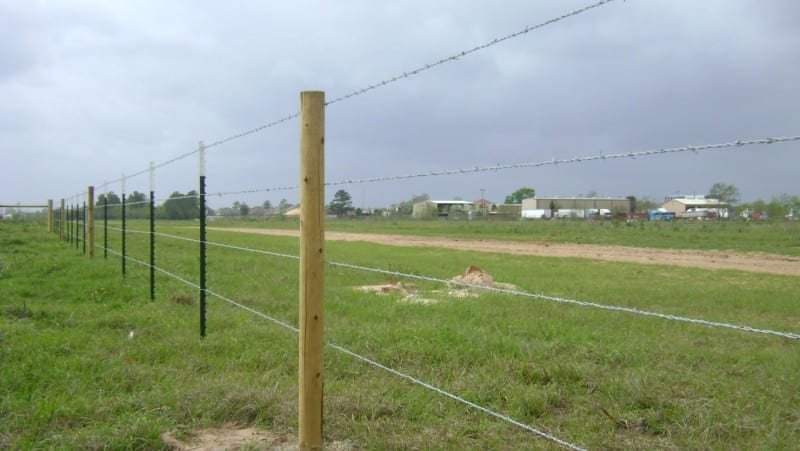
East Texas winters are mild by most standards, but they are hard on fence in their own way: weeks of saturated ground, fronts with wind behind them, the occasional hard freeze, and a rare ice storm that brings down every weak limb in the county. Cattle also lean harder on a fence when the grass is gone. An hour on the fence line in November saves a breakout in January. Here is the list.
Walk the whole line
Not from the truck. Push on posts, look at the ground line, check every corner. Carry fence pliers, a hammer, staples and clips, and fix the small things as you go.
Corners and braces first
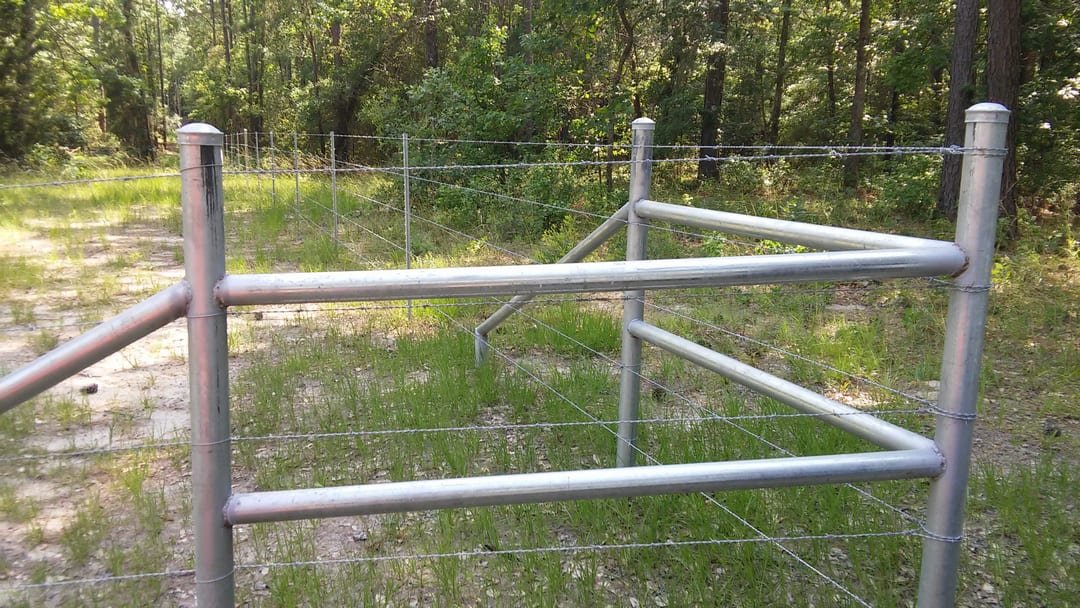
A brace post that has leaned over the summer will lean more in wet ground. Check that the brace wire is tight and the diagonal runs the right way, and reset anything that moves. Every slack run behind a corner traces back to it. Building a proper H-brace.
Wire tension
Re-stretch slack strands at the brace. Do not over-tighten: wire contracts in the cold and a strand stretched to its limit in warm weather can snap at a splice in a freeze. Replace rusted or broken strands and fix splices properly.
Posts in wet ground
Low spots and water-side lines are where posts lean in winter. Reset any that move, tamp or add concrete, and consider a brace at the bottom of a dip if there is none.
Trees and limbs
Fronts and ice bring down dead limbs. Cut back anything hanging over the line now, while the ground will hold a tractor and the brush is dormant. Clearing fences and fence rows.
Gates
Grease hinges, check latches, make sure gates swing clear of ground that will hold water. A gate that drags in winter mud gets left open, and that is how cattle end up on the road.
Water gaps and crossings
Winter rain brings high water. Check that water gaps swing or break away as they should and that the main fence is anchored on both banks above the flood line.
Electric fence
Clear vegetation off the hot wire, check the charger and the ground rods, and walk it with a tester. Wet weather shorts a fence that was fine in August.
Pens and feeding areas
Cattle crowd the hay ring and the pens in winter and push on the fence around them. Check rails, panels and posts there especially, and move hay rings before the ground around them turns to a bog that swallows posts.
Then, in spring
Walk it again after the last freeze and before the brush leafs out, and fix what winter found. Fence inspection and maintenance tips is the year-round routine; protect your fence this winter covers the yard fence.
Frequently asked questions
Does wire fence tighten in cold weather?
Yes. Steel wire contracts in the cold, so a fence stretched tight on a hot day gets tighter in a freeze and can snap at a weak splice. Stretch to proper tension, not to the limit.
What breaks fence in winter here?
Wet ground and wind more than ice. Saturated soil lets posts lean, and winter fronts drop limbs on the line. A rare ice storm does the rest.
Should I check gates before winter?
Yes. Grease hinges, check latches, and make sure the gate swings clear of ground that may hold water or freeze. A gate that drags in mud in January is a gate you leave open.