

Lake Livingston country is pine country. Pine straw, oak leaves and dead limbs fall all year and the wind piles them against the first thing they meet, which on most lots is a fence. By late summer in a dry year, that pile along the fence is tinder, and a wood privacy fence with tinder along its base is a path for fire from a grass fire, a burn pile or a neighbor's trash fire straight to the house. It is a real hazard, and it is one of the easiest to fix.
Why the fence line collects it
A solid fence is a windbreak, and a windbreak drops whatever the wind was carrying. Leaves and needles pile against the downwind side, settle under the bottom rail, and get topped up with every front. A fence row on acreage does the same with brush and dead grass. In a wet month it is a rot problem; in a dry one it is a fire problem.
What burns
- Pine straw, which dries fast and catches from a spark.
- Oak leaves and tassels, especially matted and dry on top.
- Dead limbs and brush against the fence or on it.
- Dry grass and weeds along a fence row.
- Mulch piled against the fence, which smolders.
- The fence itself once the debris lights it.
Clearing the line
- Rake or blow the base of the fence on both sides, including under the bottom rail or rot board, where the pile is deepest.
- Pull dead brush and limbs off and away from the fence.
- Mow or trim grass and weeds along the line, and keep a strip of bare or short ground along a fence row on acreage.
- Move mulch a few inches off the fence and keep it there.
- Haul or compost it well away from any structure. Do not burn it next to the fence.
On a pine lot, this is a few-times-a-year job, more in fall. It is also the single best thing you can do for a wood fence, because the same pile that burns in August rots the bottom boards in February. Fence inspection and maintenance tips puts it in the routine.
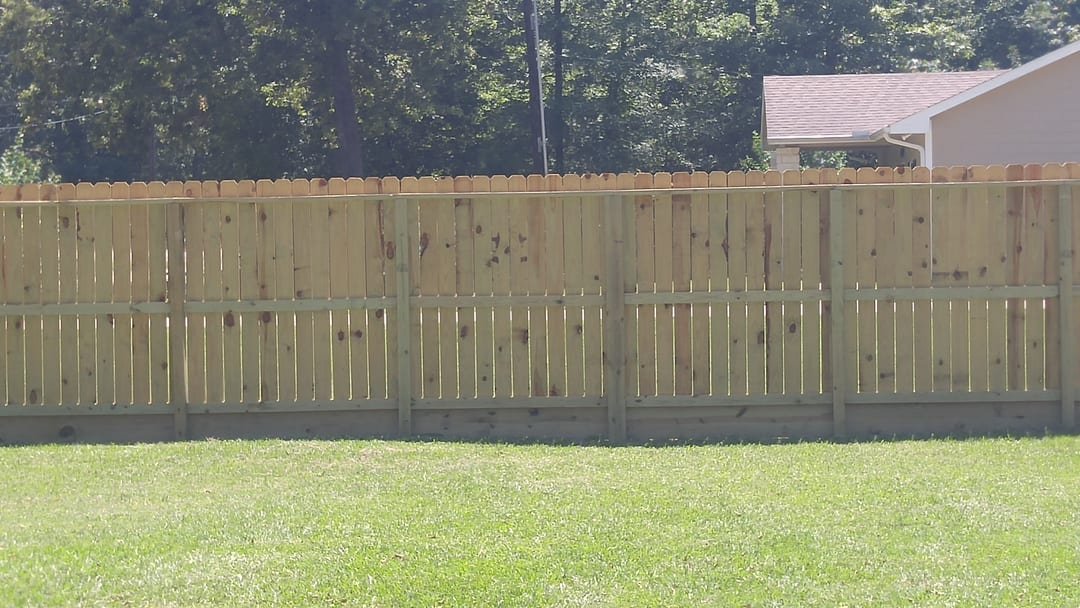
Burn piles and fence rows
Keep burn piles well away from fences, trees and structures, and never burn when a ban is on or the wind is up. On acreage, a mowed or sprayed strip along the fence row is a firebreak as well as a maintenance path. Clearing fences and fence rows covers keeping a line clean.
Design choices that help
A rot board at the base of a privacy fence is easy to rake against and easy to replace. A gap under a rail fence lets debris blow through instead of piling. Metal fence does not burn, though the debris against it does. If fire is a specific concern on your lot, say so on the estimate and we will design for it.
Frequently asked questions
Is a wood fence a fire risk?
A clean wood fence is not much of one. A wood fence with dry pine straw, leaves and dead brush piled along its base is a fuse that runs from the yard to the house. The debris is the risk; the fence carries it.
What about metal fences?
Metal does not burn, but debris piled against it does, and it holds heat and moisture against the fence. Keep the base of any fence clear.
When is fire risk highest here?
Late summer and fall after a dry spell, and any time a burn ban is on. Dry pine straw and leaf litter are at their worst then.