
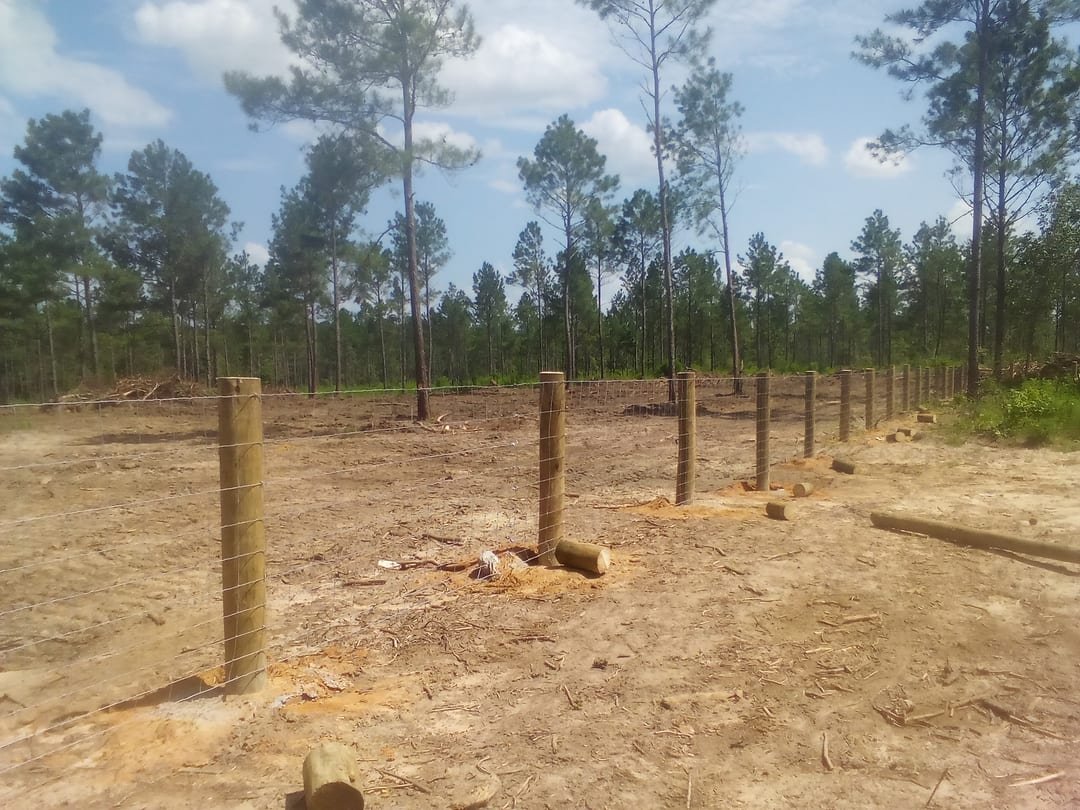
In this part of Texas a fence line left alone for ten years becomes a hedgerow. Yaupon, sweetgum, pine seedlings, greenbrier and honeysuckle grow up through the wire, the posts rot inside the thicket, and eventually the fence is held up by the brush instead of the other way around. Before a new fence can go in, all of that has to come out. Clearing is the part of a ranch fence job that nobody pictures and that often decides the price.
What is in an old fence row
- Old barbed or woven wire, often several generations of it, rusted and tangled through the brush and sometimes grown into trees.
- Rotted wood posts, steel T-posts bent into the thicket, and the occasional cedar post that is still good.
- Brush: yaupon and privet, sweetgum and pine saplings, vines.
- Larger trees that seeded on the line and are now the line.
- Surprises: a buried water line, a property pin, a well, a dump pile, a wasp nest.
What clearing involves
- Finding the line. Pins, survey marks or an old corner post. On acreage the real line and the old fence are not always in the same place, and it is worth knowing which you are following.
- Pulling the old wire. Cut free of the trees, rolled up and hauled off. Wire left in a fence row is a hazard for decades.
- Pulling the posts. Rotted wood posts come out or get cut off; T-posts are pulled; good posts are set aside.
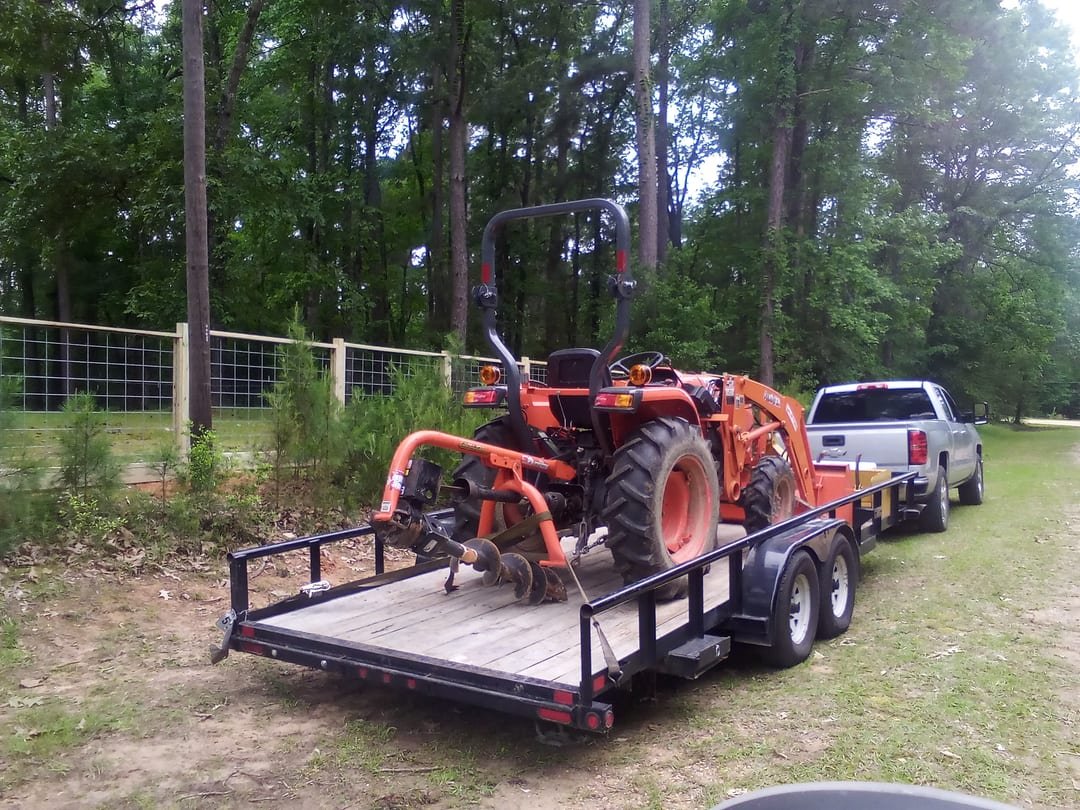
- Cutting and clearing brush. A path wide enough to work: set posts, unroll and stretch wire, and get a truck or tractor along it.
- Deciding about trees. Healthy trees that the fence can run beside stay. Trees on the line that would fall on the fence come out.
- Hauling or piling. Brush is piled or hauled as agreed.
Why it matters for the fence
A fence built into brush fails faster. Branches rub wire and bend posts, falling limbs take out sections, roots heave posts, and nobody can get to it to fix anything. A cleared line stays cleared with a mower or a spray once a year, and the fence on it can be inspected, stretched and repaired for its whole life. That is why we will not build a new fence through an old thicket and why we talk about clearing on every ranch estimate.
What we do and do not do
We clear the fence line as part of a fence job: the width needed to build and maintain the fence. We are not a land-clearing company, and clearing whole pastures, lots or wood lines beyond the fence is not something we offer. If a property needs that, we will say so and build the fence after it is done. For trees on the fence after a storm, see fence repair and insurance claim repair.
Keeping the row clear
Mow or spray the fence line once a year, keep vines off the wire, and cut saplings while they are small. A fence row that is maintained for an hour a year never needs clearing again. Debris on your fence could be a fire hazard covers the other reason to keep the line clean, and fence inspection and maintenance the rest of the routine.
Frequently asked questions
Do you clear fence rows?
We clear the fence line itself as part of building or rebuilding a fence: old wire and posts out, brush and small trees off the line, a path wide enough to work. Large-scale land clearing beyond the fence line is not a service we offer, and we will say so if a job needs it.
How wide does a fence line need to be cleared?
Wide enough to set posts, unroll and stretch wire, and get a truck or tractor down it: usually eight to twelve feet. A line you can only walk is a line you cannot maintain.
Can you leave big trees on the line?
Yes, if they are healthy and the fence can run beside them. We never fasten wire to a live tree; it girdles the tree and the wire fails when the tree moves.