

We build fences for a living, so you might expect this article to say "hire a pro." Some of it does. But plenty of people around Lake Livingston are handy, own a tractor, and have built a good fence on their own place, and we repair plenty of fences that a "pro" built badly. The honest question is not who you are but what the job is.
What DIY needs
- Tools. A post hole digger or auger, a level, a string line, a saw, a nail gun or drill, and, for wire fence, a stretcher and a post driver. The tool list by fence style.
- Time. A crew with an auger and a trailer of material builds a residential fence in a couple of days. The same fence with a hand digger and weekend trips to the store takes most of a month.
- Help. Posts, panels and rolls of wire are two-person work.
- Knowledge of the ground. How deep to go in sand versus clay, where the water sits, what the HOA allows, where the property line actually is.
Where DIY fences go wrong
We see the same things on the repair calls: posts set too shallow, no concrete or concrete poured around a post sitting in a wet hole, corners with no brace on a wire fence, gates hung on a line post, pickets touching the ground, and fence built on the neighbor's side of the line. None of these show on the day the fence is finished. All of them show within two years. Driving posts versus setting posts and building a proper H-brace cover the two that matter most.
Jobs that make sense to do yourself
- A short run of field or welded wire on T-posts between existing braced corners.
- Replacing pickets, rails or a single post on a sound fence.
- A small garden fence or a dog run on level ground.
- Staining a fence you can reach, with the right prep and a dry spell.
Jobs worth hiring out
- Anything with a lot of corners, gates or grade changes.
- Long privacy fence, where straight lines and level tops matter and the lumber is heavy.
- Wire fence corners and braces, and any stretched fence over a long run.
- Driveway gates, especially with openers.
- Fence near the water, in soft soil, or through timber that has to be cleared.
- Any fence where an HOA, a city or a neighbor will care exactly where it sits.
A middle path
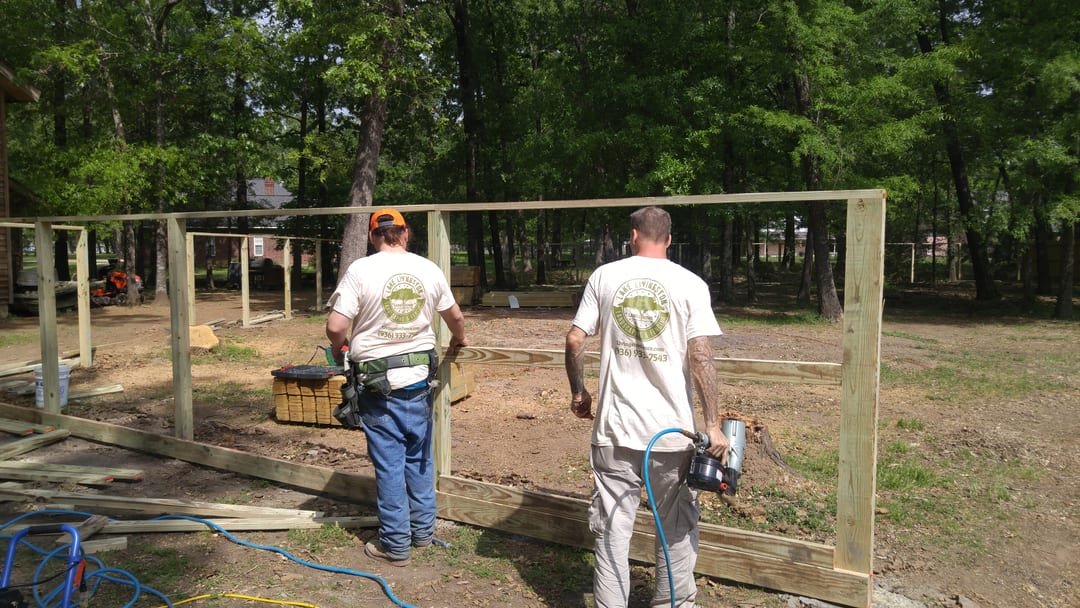
On a lot of ranch jobs we set the corners, braces and gate posts and clear the line, and the owner strings the wire between them at their own pace. On residential jobs we sometimes set posts and let a handy owner hang the pickets. If that appeals, say so on the estimate and we will price it.
What hiring a crew buys
Speed, the right equipment, posts at the right depth, corners that hold, gates that swing, insurance if something goes wrong, and someone to call when it needs attention in five years. The art and science of fence construction is about what that experience actually consists of.
Frequently asked questions
Can I build my own fence and have you do the hard parts?
Sometimes. Setting the corners and gate posts, or clearing the line, is where most DIY fences go wrong, and we can do that part and let you hang the rest. Ask on the estimate.
How long does it take a crew to build a fence?
A typical residential privacy fence is a couple of days once material is on site. A long ranch fence depends on clearing and footage. We tell you the schedule with the estimate.
Is a DIY fence cheaper?
In material, yes. In total, it depends on whether you own the tools, how much your weekends are worth, and whether it has to be rebuilt. Fences built shallow or unbraced often cost more over five years than one built right once.