
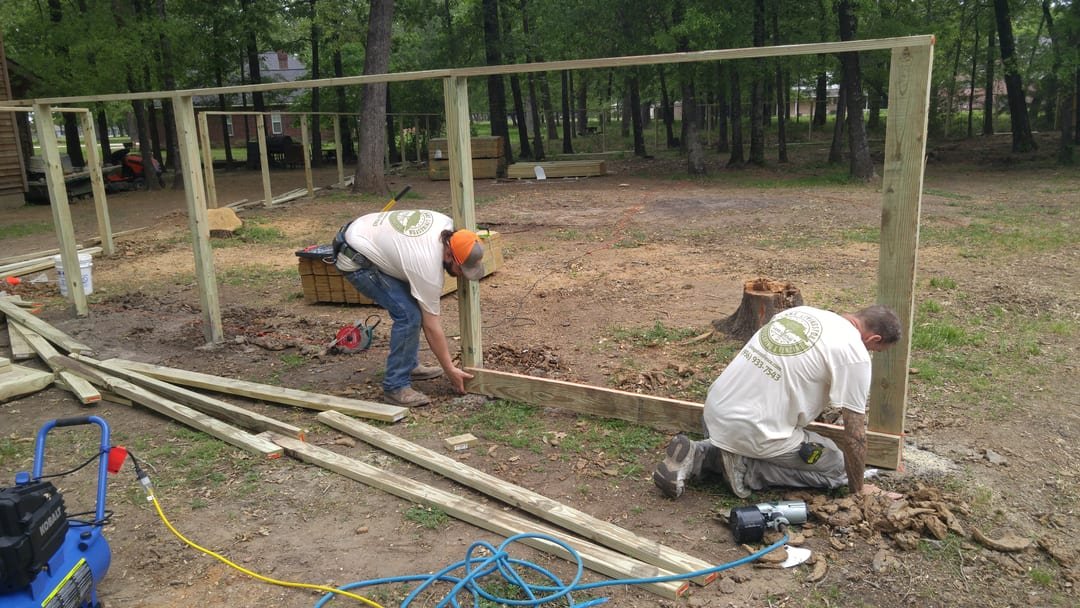
A fence is a simple thing: posts in the ground and something between them. That simplicity is why so many fences are built badly. There is nothing on the day it is finished to show whether the posts are deep enough, the corners are braced, or the bottom board is going to be sitting in water by March. It all shows up later. After twenty years of building and repairing fences around Lake Livingston, here is what we think separates the ones that last.
The science: gravity, wind and water
Gravity hangs on every gate and pulls every rail toward sag. Wind pushes on every solid panel with a force that grows with height, on a lever arm that grows with height too. Water sits against anything touching the ground and works into every cut end, nail hole and flat top. A fence that lasts is a fence where someone thought about all three before the first post went in.
Layout
Walk the line. Find the property pins. Mark the corners, the gates and every change in grade. Decide where the fence steps and where it racks. Notice the trees, the drainage and the places a truck has to reach. The layout is where the art starts, because a lot that is not a rectangle has to be made to look like it was fenced on purpose.
Posts
Below the soft layer of soil, below where the ground moves between wet and dry, in concrete crowned to shed water, with a few inches of gravel under a wood post where the ground stays wet. Corner, end and gate posts deeper and heavier, because they carry the load. On lakeshore sand, deeper again. Driving posts versus setting posts covers the method.
Bracing
A stretched wire fence pulls on its corners for its whole life, and a corner post alone cannot hold it. The H-brace is the answer, built the right way with the brace wire running the right direction. Here is how. On wood and panel fence, bracing lives in the gates: a diagonal or a steel frame that keeps a gate square.
Fasteners and hardware
Galvanized ring-shank nails hold pickets; bright nails back out and streak. Coated or stainless screws on horizontal boards and decking. Weld-on or heavy bolt-on hinges on gates, sized for the weight. Galvanized staples and clips on wire. Hardware is a tiny share of the cost and a large share of what goes wrong.
Keeping wood off the ground
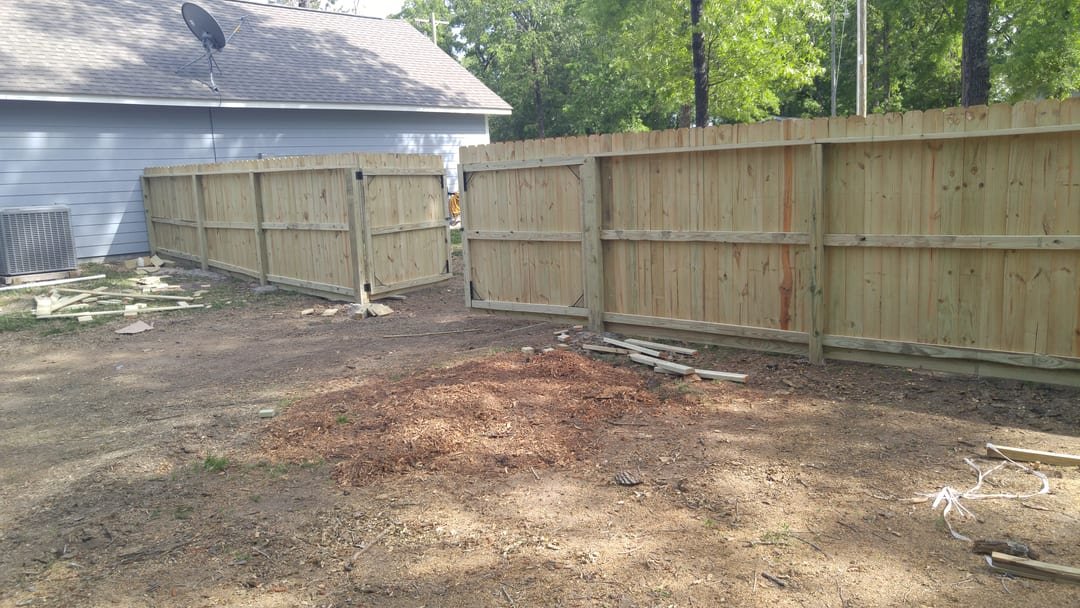
A rot board under a privacy fence. Pickets trimmed clear of the dirt. Deck framing on footings. Pergola posts on standoffs. Every piece of wood that touches wet ground is a piece that will rot, so the design should make sure the piece that does is cheap to replace. The three-rail privacy fence is the pattern.
Tension
Wire fence is stretched with a tool to a real tension and tied off properly. Chain link is pulled with a come-along, not by hand. A fence stretched right has no belly between posts and does not need re-stretching next year.
The art: judgment
Where to step a fence on a slope so it looks right from the house. How to run a line through trees without losing the trees. Which style fits the house and which the HOA will approve. When to tell a customer that the fence they asked for is not the fence they need. When a repair is worth it and when it is not. None of that is in a manual, and all of it comes from building a lot of fences on a lot of different ground.
Finish and care
Stain on wood every few years, a rinse on metal, a walk down the line after storm season. A well-built fence needs very little, but it needs that. Fence inspection and maintenance tips has the routine. If you would rather have the whole thing built by people who do this every day, request an estimate.
Frequently asked questions
What is the most common reason a fence fails early?
Posts. Set too shallow, without concrete, or in wet ground with nothing under them. Nearly every leaning fence we repair failed at the posts, not the boards.
How long should a well-built fence last?
Wood privacy fence: well past a decade with stain. Chain link and ornamental: decades. Barbed wire on braced corners: decades. The number depends more on how it was built and kept than on what it is made of.
Does a good fence cost a lot more than a cheap one?
The parts that make it good, deeper posts, concrete, braces, a rot board, coated hardware, are a small share of the total. Most of the cost is the same material and labor either way.