
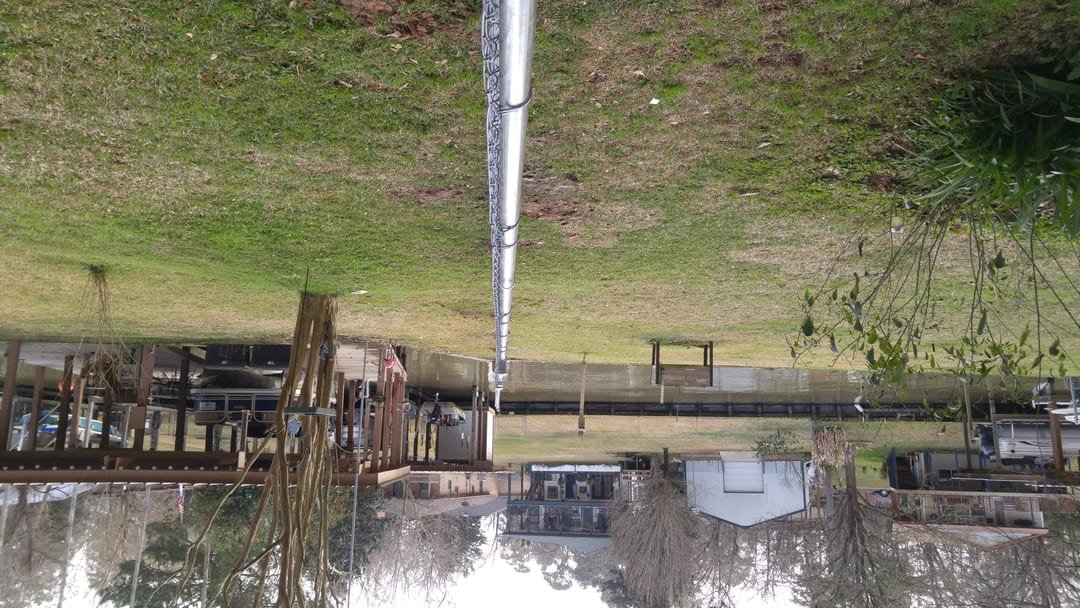
Lake Livingston is the reason most of our customers live where they live. It is the reservoir on the Trinity River that stretches roughly forty miles from Trinity in the north to the dam in the south, touching Polk, San Jacinto, Trinity and Walker counties, which is more or less the map of where we work. A property on or near the lake does not need a different kind of fence than one in town, but it needs the fence built with a few things in mind. Here are the basics.
The lake and the towns around it
Livingston, the Polk County seat, sits on the east side. Onalaska, where our shop is, is on a peninsula on the west side, connected by the US-190 bridge. Point Blank is across the next bridge on the west shore, with Oakhurst beyond it. Coldspring, the San Jacinto County seat, and the Cape Royale community are at the south end. Trinity is at the north end. Goodrich, Shepherd and Corrigan are along US-59 off the lake, and Huntsville and New Waverly are west in Walker County. Each has its own page under our service area.
Moisture is a bigger factor than inland
Ground near the water holds moisture, and humidity off the lake keeps wood damp longer after a rain. That does not rule out wood; it means post depth, drainage at the base, a rot board and a stain schedule matter more. Metal fence, especially aluminum and coated chain link, is worth a look where low upkeep is the priority. The right materials for Livingston and Onalaska goes into it.
Slope and soil
Most lake lots fall toward the water, sometimes steeply, and the soil near the shore is sand or soft fill that a shallow post leans in. Fence has to step or rack with the grade, and posts near the water go deeper into bigger footings. Lakefront fence installation covers how we build on it.
Lake communities have their own rules
Many subdivisions around the lake, Cape Royale among them, have deed restrictions or property owners' association rules on fence height, material and placement, sometimes stricter than the county. The shoreline itself is under the Trinity River Authority. We check both before pricing a fence near the water; bring the rules if you have them.
Views matter as much as privacy
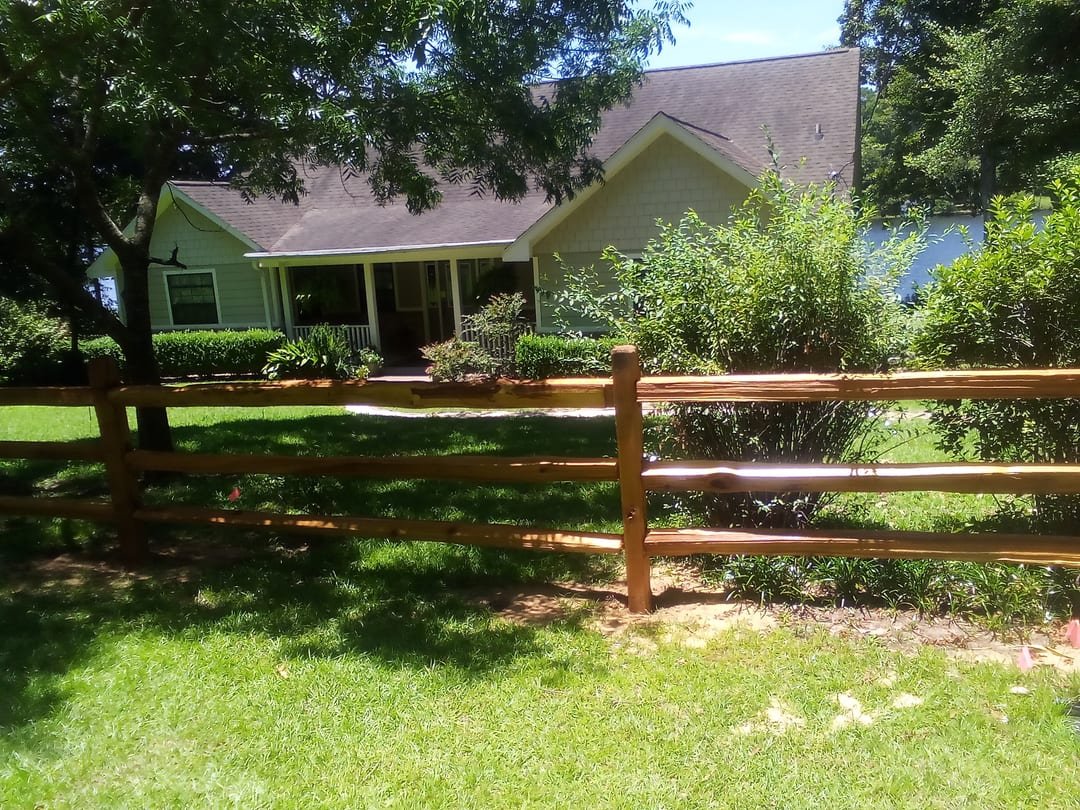
A solid privacy fence on the water side of a lake lot hides the thing that makes the lot valuable. Ornamental, aluminum, black chain link and split rail with wire keep the sightline open, with privacy fence saved for the road and the neighbors. Adjust your privacy like never before covers the middle ground.
Deer and hogs
Whitetail are everywhere around the lake and feral hogs are a real problem on acreage. A garden near the woods needs height; a yard near the woods may need hog panel. See deer fence and hog panel fence.
Storms
Weather crosses open water with nothing to slow it. Solid fence on the lake side of a lot takes the full load, which argues for posts set deeper, tighter spacing on exposed runs, and open styles toward the water. After a storm, insurance claim repair covers the claim side.
Who we are on the lake
Based in Onalaska since 2005, building and repairing fences on and around Lake Livingston. Lake Livingston fence and gate specialist says more about what that experience is worth.
Frequently asked questions
Who controls the shoreline?
Lake Livingston is operated by the Trinity River Authority, which manages the shoreline and its easement. Many lake subdivisions add their own rules. Both get checked before a post goes in near the water.
What is the biggest difference about a lake lot?
Slope and soil. Most lake lots fall toward the water and the soil near the shore is sand or soft fill. Posts go deeper into bigger footings, and fence steps or racks to follow the grade.
Which towns are on the lake?
Onalaska, Livingston, Point Blank, Coldspring and Cape Royale on the south and west, Trinity at the north end, with Goodrich, Shepherd, Oakhurst and others nearby. See our service area page.