A pasture fence keeps animals in. A corral holds animals that are being pushed, crowded, sorted, loaded and doctored, and it has to do it without hurting them or the people working them. That is a different job, and the fence is built differently: taller, heavier, deeper, with gates and alleys laid out for how cattle actually move. Here is why to build one and how.
Reasons to build a corral
- Working cattle safely. Vaccinating, tagging, sorting, weaning and loading without chasing animals across a pasture.
- Loading a trailer from a pen and an alley instead of an open gate.
- Holding animals overnight, for the vet, or for sale.
- Horses: a round pen and a holding pen for handling and training.
- Even a few head on a hobby farm need somewhere to be caught; a small pen pays for itself the first time.
Best practices in construction
- Layout before posts. Holding pen, crowding pen, alley, chute, loading area and gates, drawn on the ground with you. Round corners in the crowding pen; alleys that narrow; gates that swing with the flow.
- Posts deep in concrete, closer together than pasture fence, typically six to eight feet, because animals load the fence directly.
- Height for the stock. Five to six feet for cattle, taller in the crowding pen and for horses.
- Rails or panels on the inside of the posts so pressure pushes rail against post, not against fasteners; lag-bolted or welded, never nailed.
- Materials for the use. Pipe where it is abused; heavy treated wood or cattle panels in holding pens.
- Gates built for the job. Heavy tube or pipe gates on weld-on hinges, latches an animal cannot work open, widths for the trailer and tractor.
- No gaps, no sharp edges, nothing to catch a leg.
Corral versus post and rail
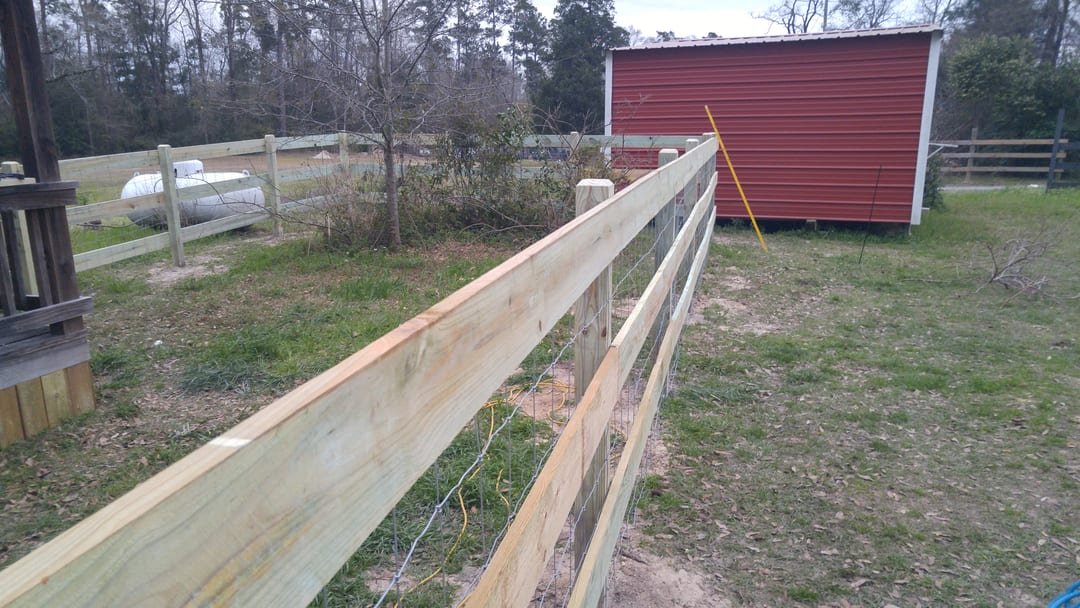
Post-and-rail fence looks like a corral and is not one: it marks a line near the house or a driveway and is not built to be pushed on. Corral fence or post and rail explains the difference. For a first set of pens, simple advice for building a basic corral walks through the decisions, and corral fence covers what we build.
Frequently asked questions
How big should a corral be?
Big enough to hold the herd you work with room to move, small enough that animals cannot run. Sort pens are smaller than holding pens; the crowding pen is smallest. We size it with you for the number of head you actually run.
Wood or pipe?
Pipe for the alley, chute and anything that takes daily abuse; wood or panel for holding pens where cost matters more. Many corrals mix the two.
Where do the gates go?
Where cattle want to go and where a person can swing them from the right side. Gates that swing both ways into an alley let one person sort.