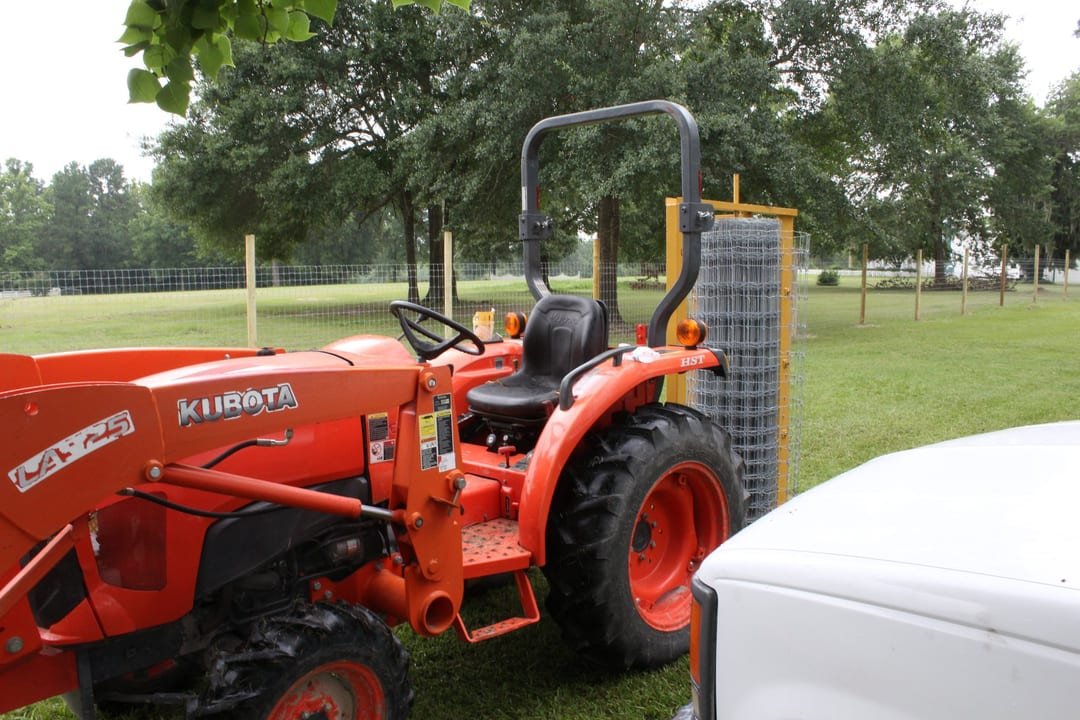
Field fence is woven wire with openings that are small at the bottom and larger at the top, and it is the fence for the mixed small farms that cover so much of Polk and San Jacinto County. Goats, sheep, a few cows, the dogs and the neighbor's dogs: one fence holds them all, when it is built right. Here is why to choose it and how it should go up.
Reasons to choose field fence
- It holds the animals that go under and through. Goats, sheep, dogs, pigs with the right spacing. Barbed wire does not.
- One fence for mixed stock, topped with a strand for cattle.
- Safer than barbed wire near people, pets and horses (with no-climb spacing).
- Reasonable cost per foot, well below panels or wood.
- It disappears behind rails. The working wire behind split rail and cross buck on half the properties around the lake.
Best practices for building it
- Braces everywhere the fence pulls. Field fence pulls on its corners harder than barbed wire because the whole sheet is under tension. H-braces at corners, ends, gates and the bottom of every dip. Building a proper H-brace.
- Posts at every grade change. A roll stretched across a hollow without a tie-down lifts its posts; a rise without a post lets the fence float.
- Line posts on eight- to ten-foot centers, T-posts or wood.
- Unroll along the line, stand it up, and stretch with a stretcher bar that pulls the whole height evenly. Pulling from the top alone bellies the bottom.
- Tie off at the braces by wrapping each horizontal wire around the post and back on itself.
- Clip to every T-post at several wires, staple to wood at an angle.
- Bottom wire at grade, with the gap closed on uneven ground; a strand of barbed or smooth wire on top where cattle lean.
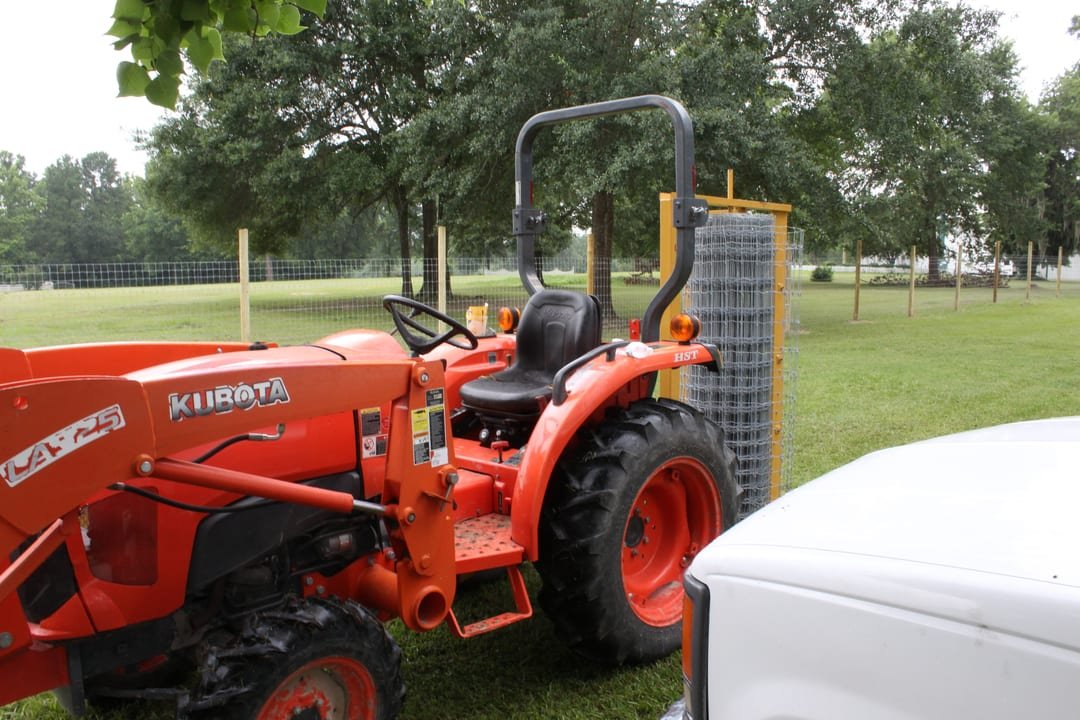
Wire choices
Standard graduated field fence for cattle and mixed stock; four-inch-opening goat and sheep fence; two-by-four no-climb for horses and dogs; taller rolls for deer. Hinge-joint for value, fixed-knot for cattle pressure and long pulls. Class 3 galvanized every time. See field fence and rolled wire fencing.
Gates and upkeep
Tube gates on braced posts where you drive, smaller gates where you walk. Walk the line twice a year, check the braces first, re-tension at the brace if a run has slackened, and keep the row clear. Fence inspection and maintenance tips.
Frequently asked questions
Hinge-joint or fixed-knot?
Hinge-joint is the standard, economical field fence and fine for most small acreage. Fixed-knot holds its shape under cattle pressure and over long pulls and is worth the extra on bigger pastures and anywhere animals lean.
How tight should field fence be?
Tight enough that the horizontal wires are straight and the tension curves in the wire are about half pulled out. Over-stretched fence breaks at the knots; under-stretched sags.
Do I need a top strand of barbed wire?
With cattle, yes: it keeps them from leaning the fence over. With goats, sheep and dogs alone, no.