
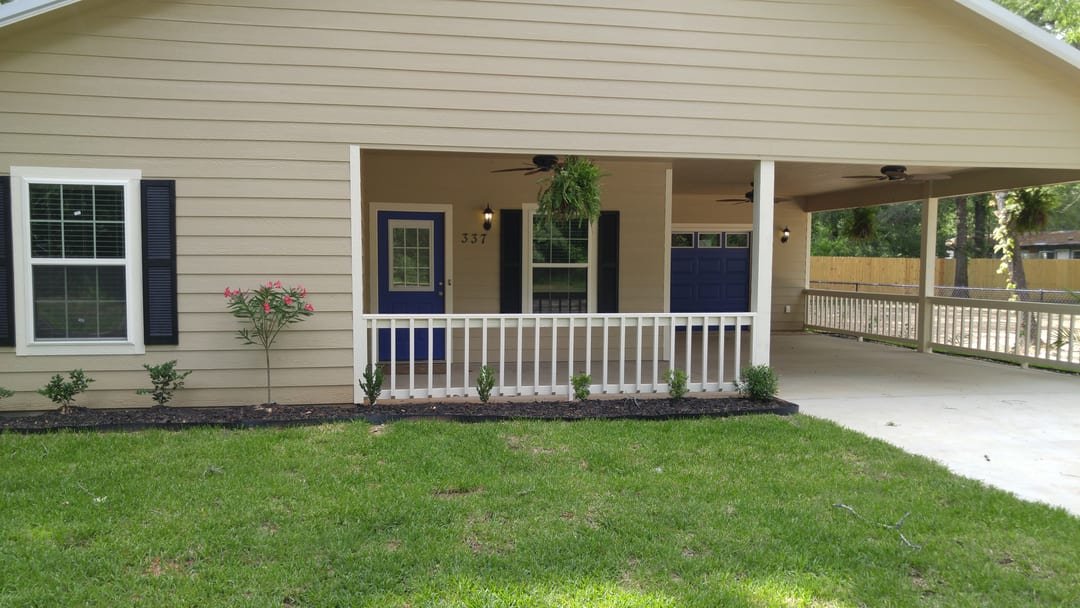
Almost every property we fence around Lake Livingston has, or wants, something beyond the house: a shed for the mower, a shop for the tools, a garage for the boat, a pergola for shade. These structures and the fence line have to work together, and the mistakes are easy: a gate too narrow for the trailer, a fence that blocks the only truck access to the shop, a pergola that catches the wind off the lake. Here is how to think about the whole set.
Sheds and workshops
A storage shed keeps tools, lawn equipment and supplies out of the weather. A workshop is a step up: more floor, light, ventilation and power. Put it where a truck can back up to it, where water does not run, and where it does not block the view that matters. Skirting closes in a shed on blocks; see skirting.
Garages and carports
Covered parking for vehicles, boats and RVs, open or enclosed. On a lake lot the length and height of the boat and the trailer set the size. Garages and carports near Lake Livingston goes into siting, drainage and sizing.
Pergolas
Shade and structure over a patio, deck or outdoor kitchen without enclosing it. We build these, in cedar or treated pine on concrete footings, framed for the wind that comes across the lake. See pergola construction.
Material choices: metal or wood
Metal buildings cost less to keep up and hold up to weather with almost no attention. Wood looks right next to the house and a cedar fence and is easier to modify later, but needs stain like any other wood. The usual answer on a rural lot is metal for the shop and the barn, wood for anything the house looks at.
Planning the fence and gates around them
- Access first. Every building needs a path for the biggest thing that will reach it: a delivery truck, a trailer, the tractor. Gate widths and fence lines follow from that. See driveway gates.
- Tie the fence into the building where it makes sense: a fence to the back corner of a garage closes a yard with less fence and one fewer gate.
- Screen what should not show. A privacy screen or an R-panel fence hides a shop or an equipment yard from the house and the neighbors.
- Keep drainage in mind. Roof water from a building dumped at a fence line rots posts and floods the pen.
- Build the fence last, after the building is up and the trucks are gone, unless the gate location is fixed and the posts can go in early.
Where we come in
Fences, gates, decks, pergolas, screens and skirting are what we build, and we are glad to lay them out around a building you are planning. Other services covers the full list, and the estimate is the right place to put the whole plan on the ground.
Frequently asked questions
Which of these do you build?
Pergolas, decks, skirting, and the fences, gates and screens around any outbuilding. For the structures themselves, garages, sheds and workshops, plan the fence and gate layout with us and we will coordinate with whoever builds the building.
Metal or wood outbuilding?
Metal buildings cost less to maintain and shrug off weather; wood looks warmer next to a house and a cedar fence and is easier to modify. Many places use metal for the shop and wood for anything near the house.
Should the fence go up before or after the building?
After, usually. The building site needs truck access, and the fence can then tie into the finished building and save a run. Set the gate posts early if the gate location is fixed.