
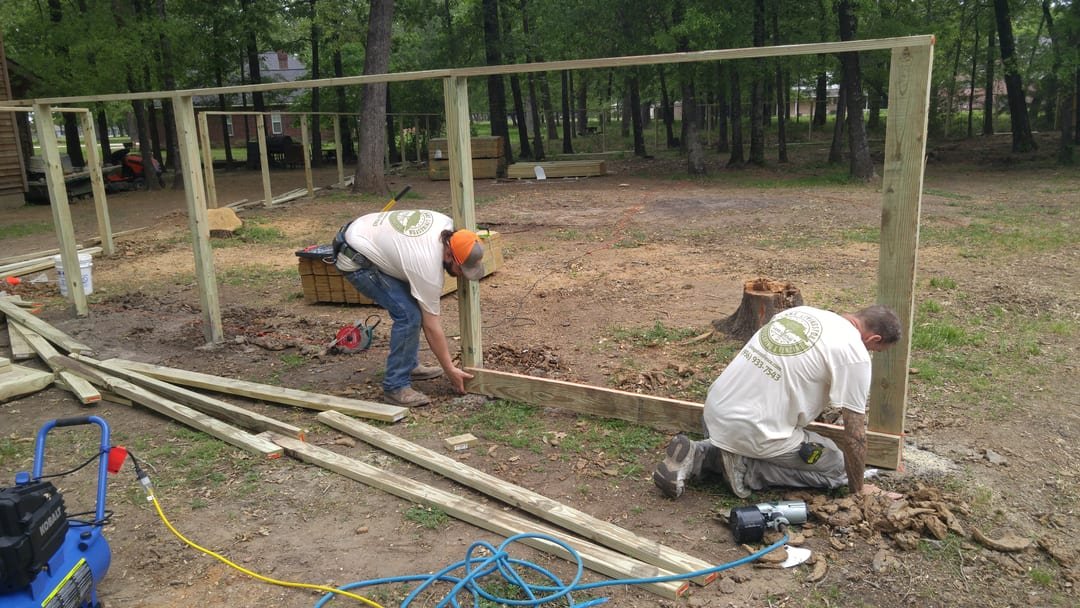
Anyone with a hammer can nail a board over a hole in a fence. A quality repair is different: it finds why the fence failed, fixes that, and leaves the section as good as the day the fence was built. Around Lake Livingston, where wet ground, storms and shallow posts take fences apart in predictable ways, here is what to expect from a repair done right.
It starts with the cause
A leaning run usually means a post or a brace failed, not that the boards got heavy. A sagging gate means a post leaned or a brace was never built. Slack wire means a corner moved. We look at the posts, the footing and the ground before we quote, because fixing the symptom means coming back next year.
What a quality repair includes
- New posts set in concrete at full depth, not shoved into the old hole.
- Matched materials: same picket size and style, same wire type, same coating on metal.
- Gates rehung with a brace or a steel frame and hinges sized to the gate.
- Wire re-stretched from a rebuilt corner, not just pulled tighter against a leaning brace.
- Galvanized or coated hardware, so the repair does not rust before the fence does.
- The old material hauled off and the site left clean.
- An honest word about the rest of the fence and what it will need.
Knowing when to say replace
When posts are rotted along most of a run, when wire is rusted through, when the whole fence was built shallow and keeps failing the same way, a repair is money spent twice. A quality repair contractor says so and prices the rebuild of that run next to the repair. What affects fence repair cost explains how we draw that line.
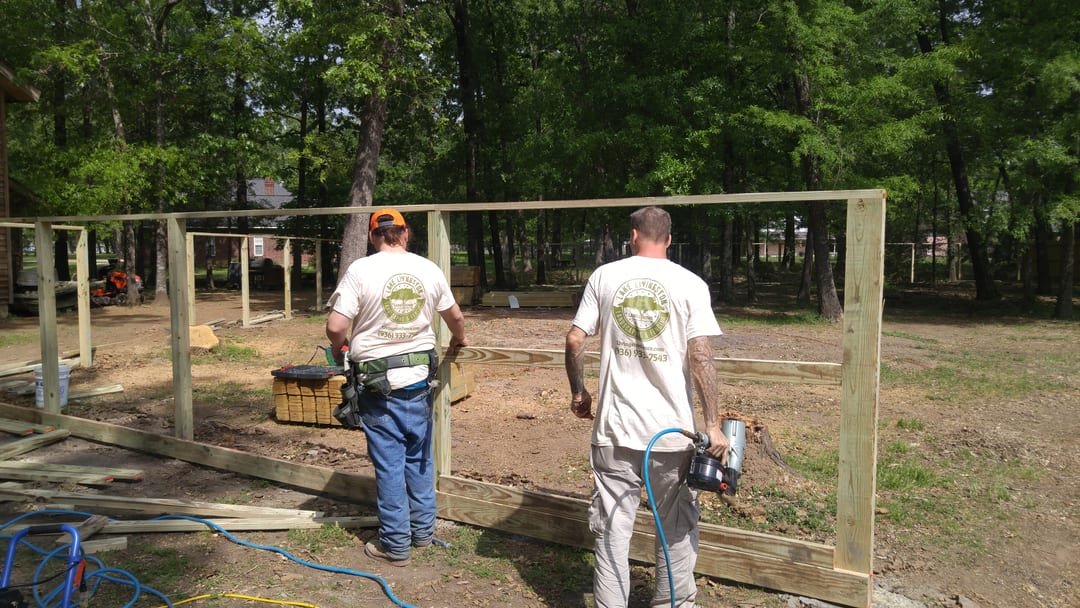
Repairs we do most around the lake
Storm damage and trees on the fence. Leaning and rotted posts. Dragging gates. Chain link re-stretched after a tree or a truck. Barbed wire and field fence corners rebuilt and runs re-stretched. Ornamental panels and posts straightened or replaced. Most of it on fences we did not build. See fence and gate repair, and insurance claim fence repair when a storm did it.
Catching it early
The cheapest repair is the one you call about when the post is leaning, not when the run is down. Fence inspection and maintenance tips is the twice-a-year walk that catches it.
Frequently asked questions
How do I know a repair was done right?
The new post is in concrete at full depth. The gate has a brace. The wire run has a rebuilt corner. The materials match the fence. And the contractor told you what caused the failure, not just what they replaced.
How fast can you get to a repair?
It depends on the season and the damage. Gates and livestock fence that are holding animals come first. We tell you the honest schedule when you call.
Will new wood match my old fence?
New cedar is lighter than weathered cedar until it ages or the run is stained. We match size, style and height; a stain over the whole run blends old and new.