
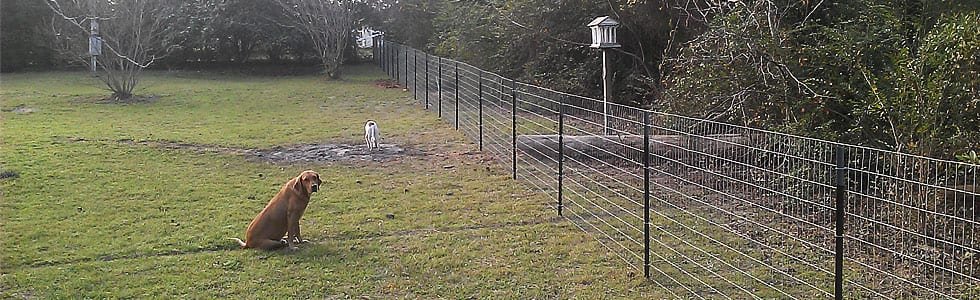
A dog run is a small fence with a smart adversary inside it. Dogs find the low spot, the gap under the gate, the loose clip and the soft dirt along the fence line, and they find it within a week. Here is how to build a run that holds, whether we build it or you do.
Height
Four feet for most dogs. Five or six for large breeds, jumpers and climbers. If a dog has gotten over a fence before, build taller than you think you need; the second escape teaches the dog the fence can be beaten.
Wire
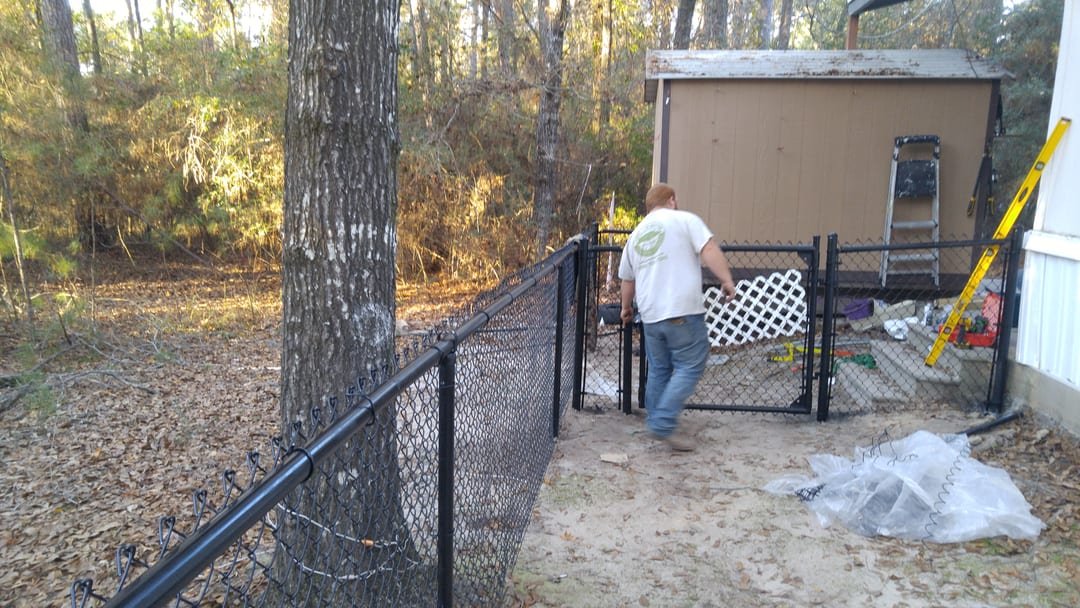
Chain link is the standard: strong, long-lasting, and dogs do not chew it. Two-inch mesh, 11-gauge, galvanized or black vinyl-coated. Welded wire with two-by-four openings is the lighter, cheaper option for smaller or calmer dogs. No-climb woven wire is the choice if the run is also a yard fence that should look like country. Never field fence with big openings for a small dog, and never barbed wire anywhere near a dog.
Posts
Set in concrete below the soft soil, with corners and the gate post deeper. On a chain link run, terminal posts heavier than line posts. A dog leaning or jumping on a fence loads the posts more than people expect. Posts on eight-foot centers, six for welded wire.
The bottom: where runs fail
- A bottom tension wire on chain link so the mesh cannot be pushed out at the ground.
- For diggers, a wire apron bent outward along the ground and pinned, or the wire buried a few inches, or pavers along the inside edge.
- Level ground along the fence line, or the fence stepped to follow it, so there is no gap under the bottom.
The gate
Framed from the same material, hung on a set post, with a latch the dog cannot nose open: a self-latching gravity latch, a spring latch, or a latch with a clip. The gap under the gate is where every dog checks first; hang it low and keep it level.
Shade, footing and size
Shade in the run, from a tree, a roof or a shade cloth, because an East Texas afternoon in a bare run is dangerous. Footing that drains: gravel, decomposed granite, or grass with a dry spot. Size the run for the dog to move, with the long side along the fence where it will pace anyway.
Climbers
A dog that climbs chain link needs an inward-angled top, a roof over the run, or a solid fence it cannot grip. Privacy fence stops most climbers and most jumpers, because they cannot see what they are jumping toward.
On acreage
Out in the country a dog run often becomes a dog yard: an acre of field fence or no-climb on braced corners around the house, with a gate at the drive. Same rules, bigger scale. Do you need a chain link fence? and field fence cover the two usual answers.
Frequently asked questions
How tall for a dog run?
Four feet holds most dogs. Five or six for big dogs and known jumpers. If a dog has cleared a fence before, go six.
What stops a digger?
A buried edge: wire bent outward along the ground and pinned, or buried a few inches, or a strip of concrete or pavers along the inside of the fence. Dogs dig at the fence line, not in the middle.
Chain link or welded wire?
Chain link is stronger and lasts longer; welded wire is cheaper and looks lighter. For a large or determined dog, chain link. For a small dog on a budget, welded wire works.