"Made in the USA, built in Texas" is a line that sounds like a slogan, so here is what it actually means on our job sites. It is about where the material comes from, who puts it in the ground, and who answers the phone afterward. None of it is complicated. All of it affects whether a fence is standing in fifteen years.
Why sourcing matters for a fence
A fence is a few materials used in quantity: lumber, wire, steel, concrete, fasteners. Small differences in grade and coating multiply across hundreds of feet. Light-coated wire rusts in a few seasons here; Class 3 galvanized lasts decades. A thin picket cups; a graded one stays flat. A bright nail streaks; a galvanized one does not. Buying the right grade costs a little more per foot and saves a rebuild.
What "built in Texas" means day to day
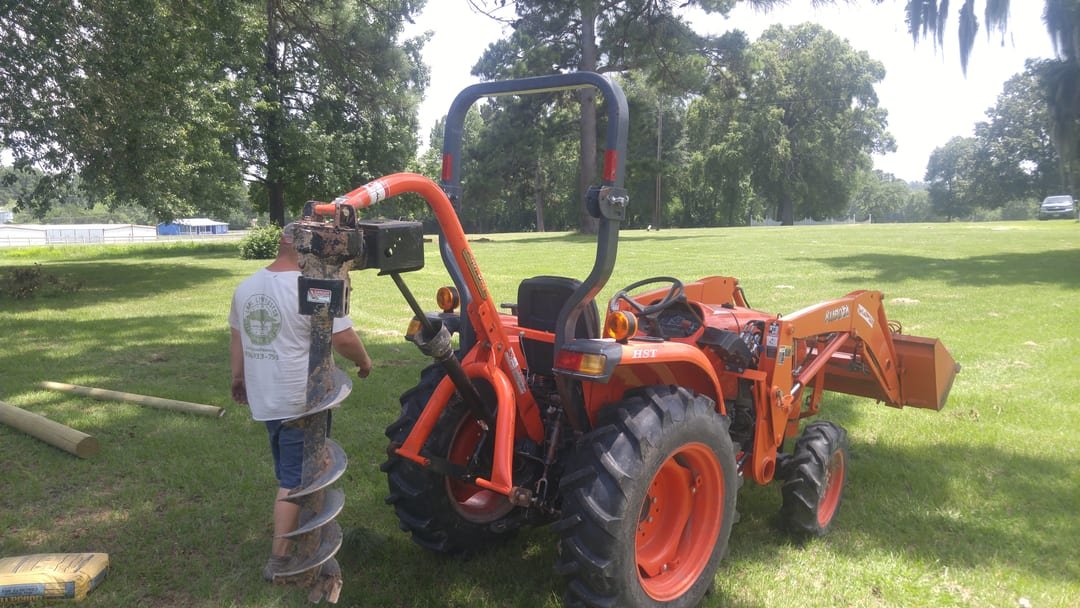
Our crews are our own. We do not sell a job and hand it to a subcontractor we have never met. The people who walk your property for the estimate are the people who set the posts, hang the gates and clean up. They live around Lake Livingston, build for the humidity and the soil they know, and are here when a latch needs adjusting in five years.
Wood
Cedar where a natural finish and rot resistance matter: pickets, rails, split rail, pergolas. Pressure-treated pine where a painted or stained finish is planned and for the posts and rails behind cedar. We buy graded lumber from suppliers we have used for years, because a bundle of twisted pickets costs us a day and you a crooked fence. See wood fence.
Metal
Consistent gauge and a coating that stands up to humidity are the two things we check. Galvanized and vinyl-coated chain link, powder-coated ornamental steel, and aluminum where rust is the enemy. Cut ends sealed, coated hardware, nothing bare. See metal fence.
Farm and ranch
Wire gauge and coating class, T-post weight, and corner posts that will hold a brace for twenty years are what we buy for. Cheap wire is the most expensive thing on a ranch fence, because it fails first and takes the labor with it. See farm and ranch fence.
Gates and hardware
Hinges and latches sized to the gate, weld-on where the gate is heavy, adjustable where the style allows. A gate is hardware; cheap hardware is a sagging gate. See gates.
A promise, not a slogan
We build with material we trust, with people we employ, for ground we know, and we stand behind it. That is the whole of it. About Texas Rural Fence and Texas pride say a bit more about why.
Frequently asked questions
Do you subcontract the installation?
No. Our own crews build every fence, gate, deck and pergola. The people who look at the job are the people who set the posts.
Where does your material come from?
From suppliers we have worked with for years and trust for consistent grade, coating and sizing. We do not chase the cheapest roll of wire or the lightest pickets, because we are the ones who come back when they fail.
Does "built in Texas" mean anything practical?
It means the fence is built by people who live where it stands, for the weather and soil it stands in, and who will be here when it needs attention.